How to Create a Welcoming Environment for New Residents
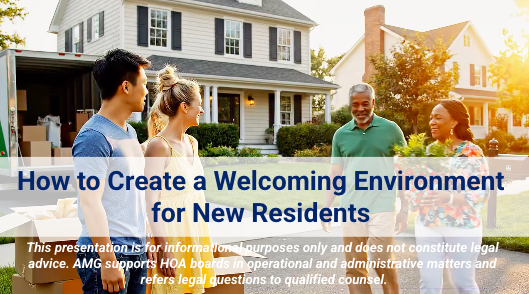
“When new residents feel welcomed, a neighborhood becomes a community.”
The first few weeks in a new neighborhood shape how residents view their HOA — and their neighbors. A warm, organized welcome builds trust, encourages participation, and sets a positive tone for years to come.
At Association Management Group (AMG), we assist HOA boards in creating welcoming systems that make every resident feel included from day one. Here are five practical steps your HOA can take to foster a friendly, connected environment for newcomers.
Make Introductions Easy
Nothing says “welcome” like a friendly greeting.
Make sure new residents know who’s who and where to go for help.
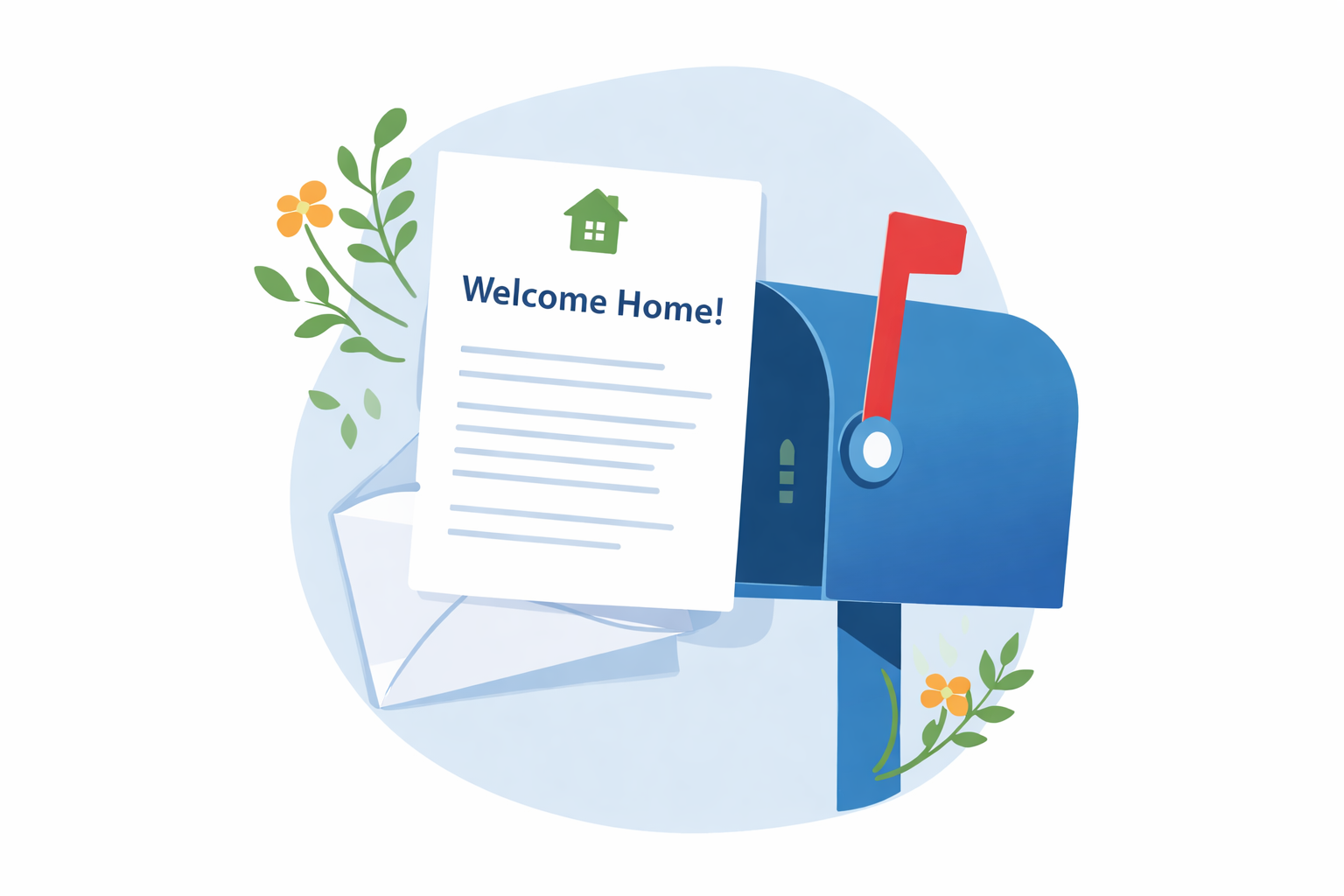
Ideas to try:
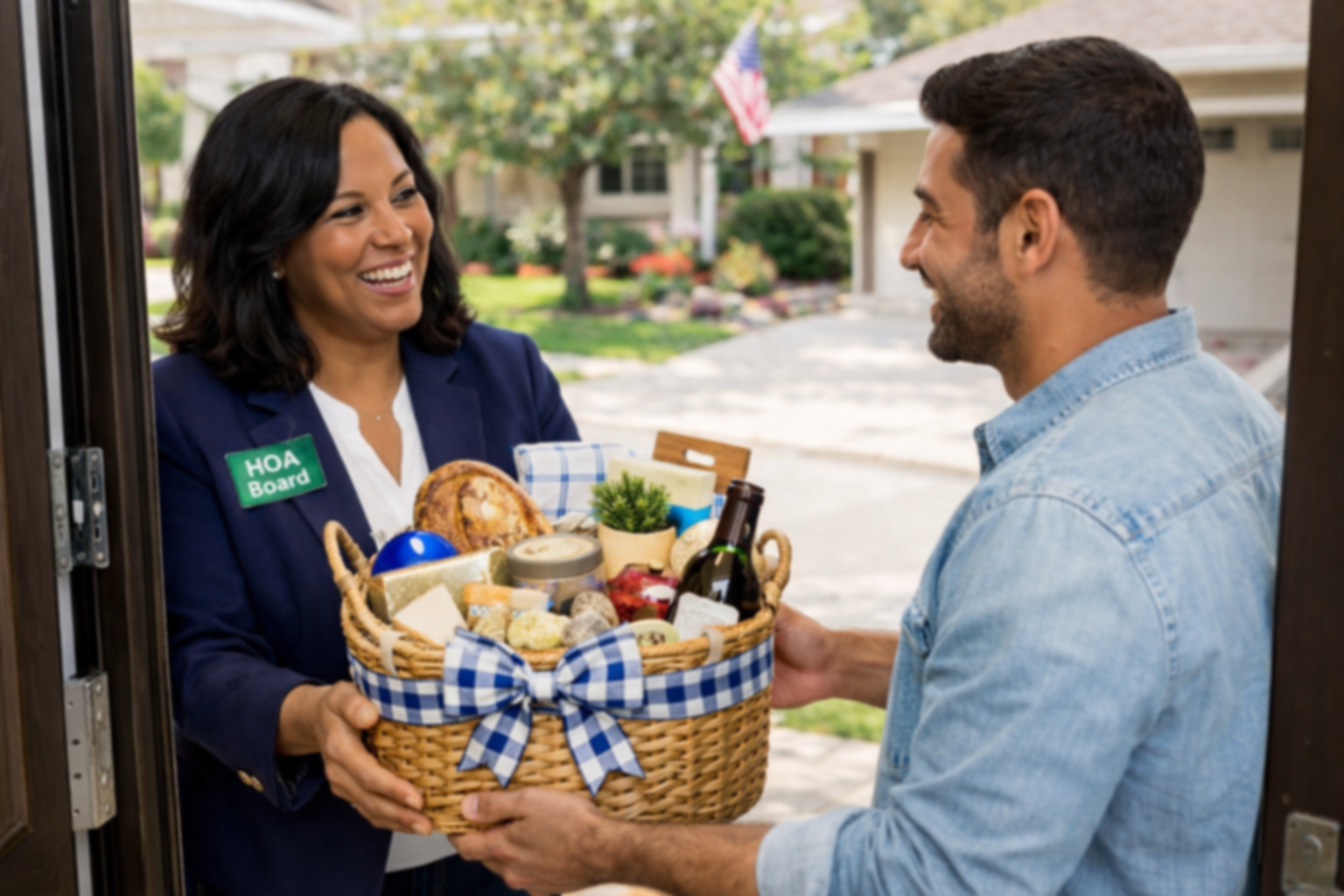
Send a “Welcome Home” letter or packet within a week of move-in.
Include contact information for the management team, board, and key committees.
Offer a short introduction to your community’s history or traditions.
Example:
An HOA created a “Welcome Neighbor” email series with quick facts, helpful links, and a personal note from the board president. New residents responded with gratitude — and many attended their first HOA event within 30 days.
Provide Clear, Helpful Information
Moving in can be overwhelming. Help residents understand community expectations before confusion occurs.
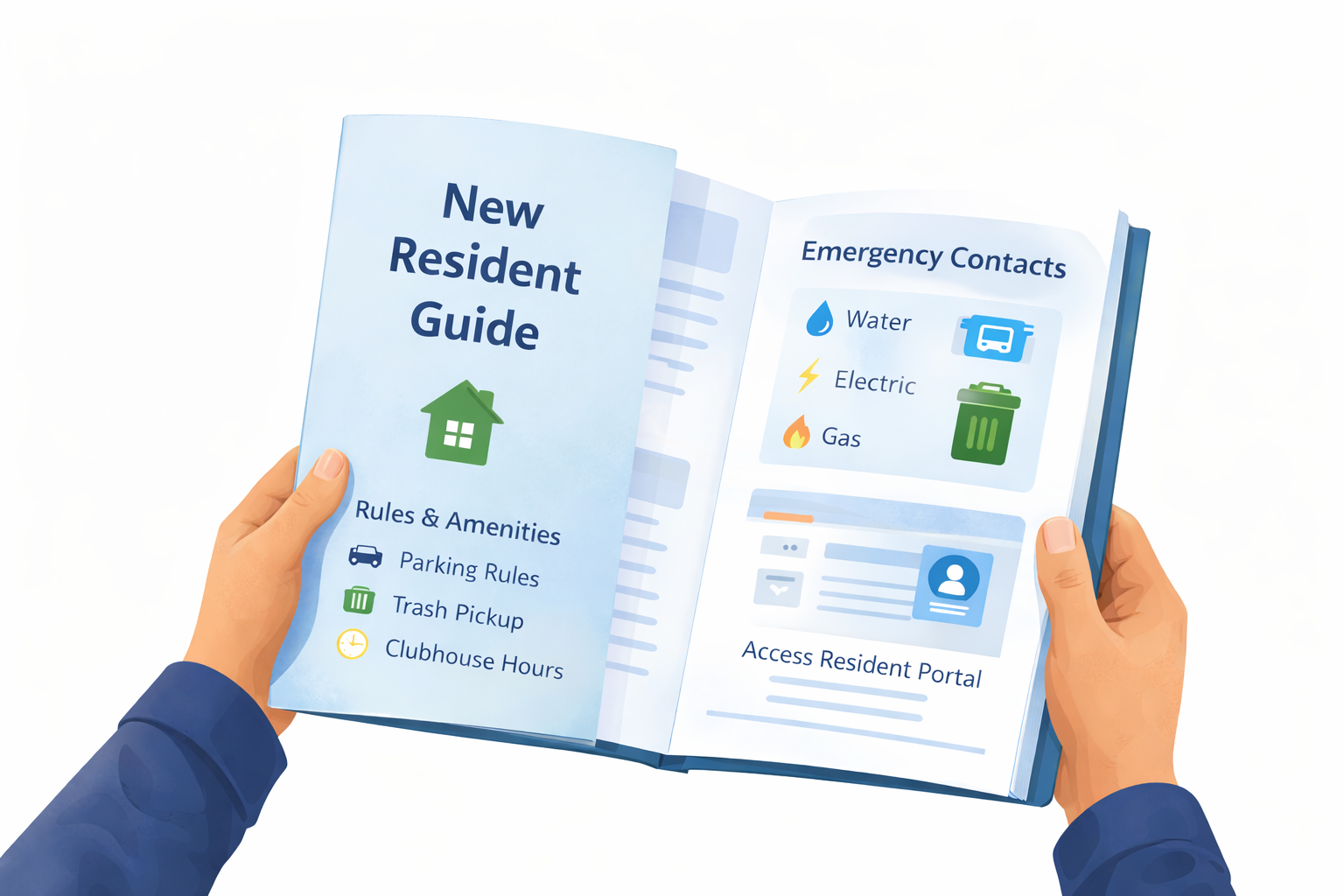
What to include:
Key rules and amenities (parking, trash pickup, clubhouse hours)
Quick-reference list of utilities and emergency contacts
How to access the resident portal or submit requests
Example:
An HOA compiled a “New Resident Guide” booklet designed by AMG. By answering the top ten questions up front, they reduced new-homeowner calls by half.
Pair People, Not Just Paperwork

Personal connection matters. Introduce new residents to friendly faces who can help them feel part of the neighborhood.
Ideas:
Create a “Welcome Committee” or volunteer ambassador team.
Pair each newcomer with a “Neighbor Host” for their first month.
Invite them to the next event or board meeting personally.
Example:
An HOA launched a “Neighbor Host” program, matching new residents with volunteers. Attendance at community gatherings doubled, and feedback called it “the best part of moving here.”
Engage Early Through Events and Outreach
Don’t wait until the annual meeting to involve new homeowners. Create simple, welcoming opportunities early on.

Engagement ideas:
Host quarterly “Meet & Greet” coffee hours or “New Neighbor Nights.”
Highlight new residents in newsletters (with permission).
Share upcoming event invites right after move-in.
Example:
An HOA added new residents to its community text alerts and invitation lists immediately. Their next event had record attendance — and half were first-time participants.
Build a Lasting Sense of Belonging
Welcoming shouldn’t end after move-in day. Ongoing connection turns newcomers into invested neighbors.
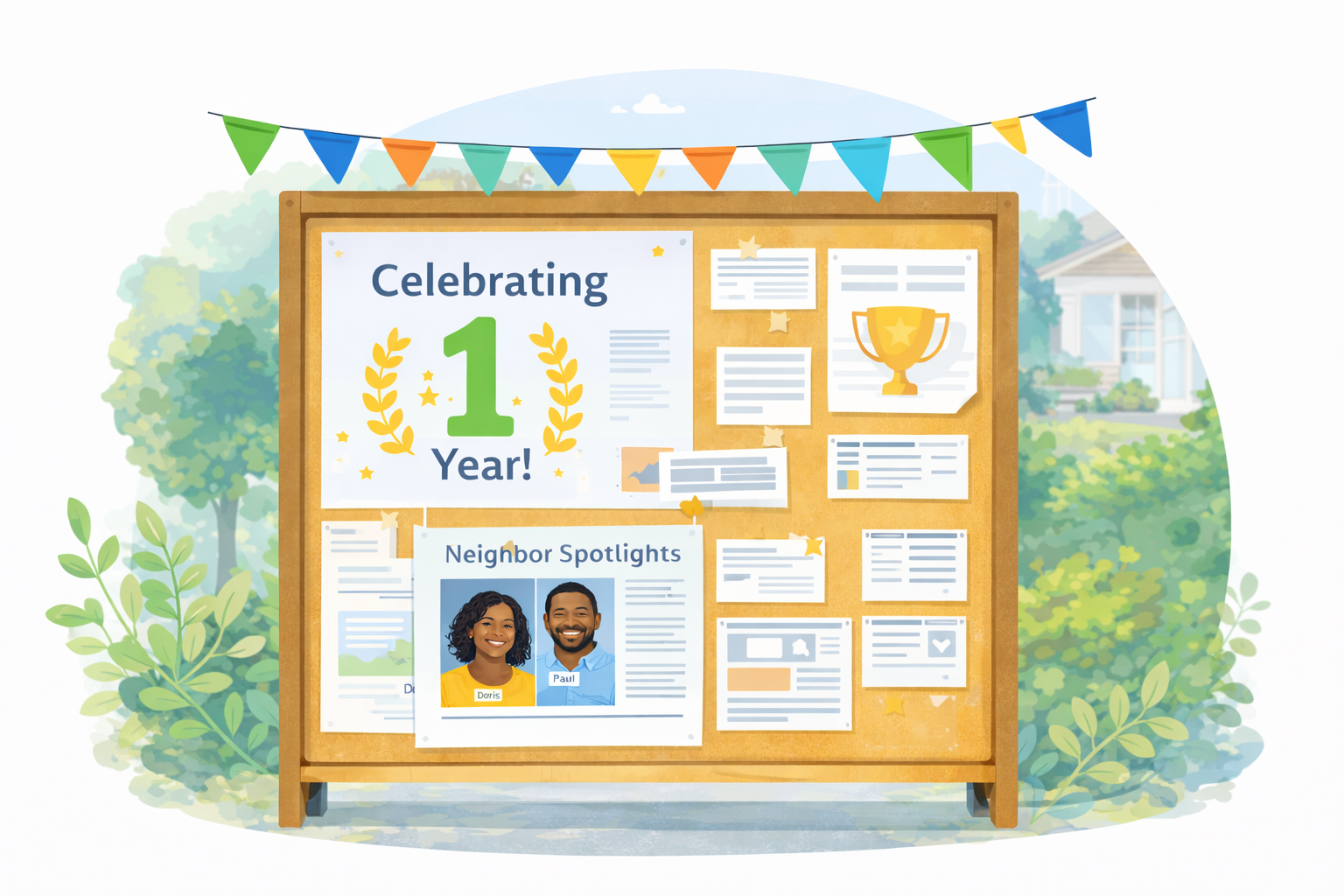
Sustain the welcome:
Feature “Neighbor Spotlights” in newsletters.
Recognize volunteer participation or achievements.
Reinforce inclusivity in community messaging and events.
Example:
An HOA created a “Anniversary” section in its newsletter, celebrating residents’ first year in the community. It fostered pride and retention.
Welcome Is a Culture, Not a Moment
A single greeting is nice — but a culture of welcome creates lasting community strength.
When boards lead with friendliness, communication, and inclusion, residents feel valued and engaged. AMG supports that mission by helping boards build the structure and systems that make every welcome genuine.
About the Author
Paul Mengert, CEO of Association Management Group, has spent over 40 years helping community associations operate more effectively, transparently, and fairly. He has personally served on HOA and condo boards in both North and South Carolina, bringing a firsthand understanding of the challenges board members face.
Paul is a nationally recognized educator who has trained managers and board members across the Carolinas and in dozens of other states. He teaches decision-making and governance strategies and is a frequent guest lecturer at Wake Forest University School of Law. Named Educator of the Year by the Community Associations Institute, Paul is known for combining deep experience with a practical, solutions-first approach that boards trust. Learn more at AMGworld.com.
-
Scene 1: Introduction
How to Create a Welcoming Environment for New Residents
This presentation is for informational purposes only and does not constitute legal advice. Association Management Group (AMG) supports HOA boards in operational and administrative matters and refers legal questions to qualified counsel.
Scene 2: Why First Impressions Matter
Hello, and welcome.
Today, we’re discussing how your HOA can create a welcoming environment for new residents—because every positive neighborhood starts with a friendly first impression.
First impressions shape expectations, and in community living, they often set the tone for long-term engagement, communication, and cooperation.
Scene 3: Make the Welcome Personal
Moving into a new community is exciting—but it can also feel overwhelming.
A personal welcome helps residents feel comfortable, informed, and acknowledged right away. That welcome doesn’t have to be complicated.
It can be as simple as a “Welcome Home” note from the board, a small packet with community details, or an introduction email from the management team explaining what to expect next.
Those small gestures signal to new homeowners that their association is organized, approachable, and invested in their experience.
Scene 4: Provide Helpful Information Early
The best way to prevent confusion is to communicate clearly before questions arise.
Clear guidance upfront reduces frustration and helps residents feel confident navigating their new community.
Include key information—such as rules, contact details, and how to log into the community portal—in every welcome kit. When expectations and processes are explained early, residents know where to turn and what’s expected of them.
One HOA created a one-page “Top 10 Things to Know” sheet, and new homeowners loved it. It answered common questions right away, reduced follow-up calls, and set a professional, organized tone.
Scene 5: Foster Personal Connections
A friendly community doesn’t build itself—it grows through relationships.
Policies matter, but people are what truly make a neighborhood feel like home.
Assigning a neighbor host, forming a welcome committee, or organizing a brief “Meet the Board” coffee hour helps turn unfamiliar faces into real connections.
When new homeowners meet people early, they’re far more likely to join committees, attend meetings, and feel comfortable participating in community life.
Scene 6: Engage New Residents Early
A welcome shouldn’t stop at the front door—or after the first email.
Early engagement helps residents feel included before habits of disengagement ever form.
Invite new residents to participate immediately—whether it’s a social event, a clean-up day, or a holiday gathering. Even a simple invitation can make someone feel seen and valued.
Keep them in the loop with newsletters and email updates, and don’t forget to celebrate milestones like their first year in the community.
Scene 7: Build a Culture of Welcome
Being welcoming isn’t a single gesture—it’s a mindset that shows up in how an association communicates and interacts every day.
When boards lead with warmth, communicate clearly, and highlight positive neighbor stories, that tone ripples throughout the community. Residents notice—and they respond.
Over time, this approach creates a culture of respect, inclusion, and participation—values that define thriving, well-run HOAs.
Scene 8: Closing
Welcoming new residents is more than good manners—it’s good management.
A thoughtful welcome builds trust, reduces conflict, and strengthens the entire community.
When people feel at home, they stay engaged, take pride in their properties, and contribute positively to their neighborhood.
At Association Management Group, we’re proud to support HOA boards in creating that environment—one that turns neighborhoods into real communities.
To view our informational pamphlet from this webinar. Click here or on the image.
AMG facilitates community association management and provides educational resources. AMG does not provide legal or financial advice. For questions involving statutes, insurance coverage, or disputes, please consult licensed professionals.