
HOW TO EFFECTIVELY COMMUNICATE WITH RESIDENTS AS A PROPERTY MANAGER
Disclaimer: AMG provides operational support to HOA boards but does not offer legal advice. Any legal concerns should be directed to qualified legal counsel. This content is for informational purposes only.
“When communication improves, everything in a community improves.”
Clear, respectful communication is the foundation of every well-managed HOA. It reduces misunderstandings, builds resident confidence, and strengthens trust between the board and the people it serves. Effective communication also supports smoother operations, more productive meetings, and stronger compliance with community standards.
At Association Management Group (AMG), we assist HOA boards and property managers in building communication systems that are proactive, professional, and people-centered. These systems help boards stay informed, residents feel respected, and issues get resolved more efficiently. Below are five practical steps to help your community connect effectively.
Step 1: Create Clear Channels
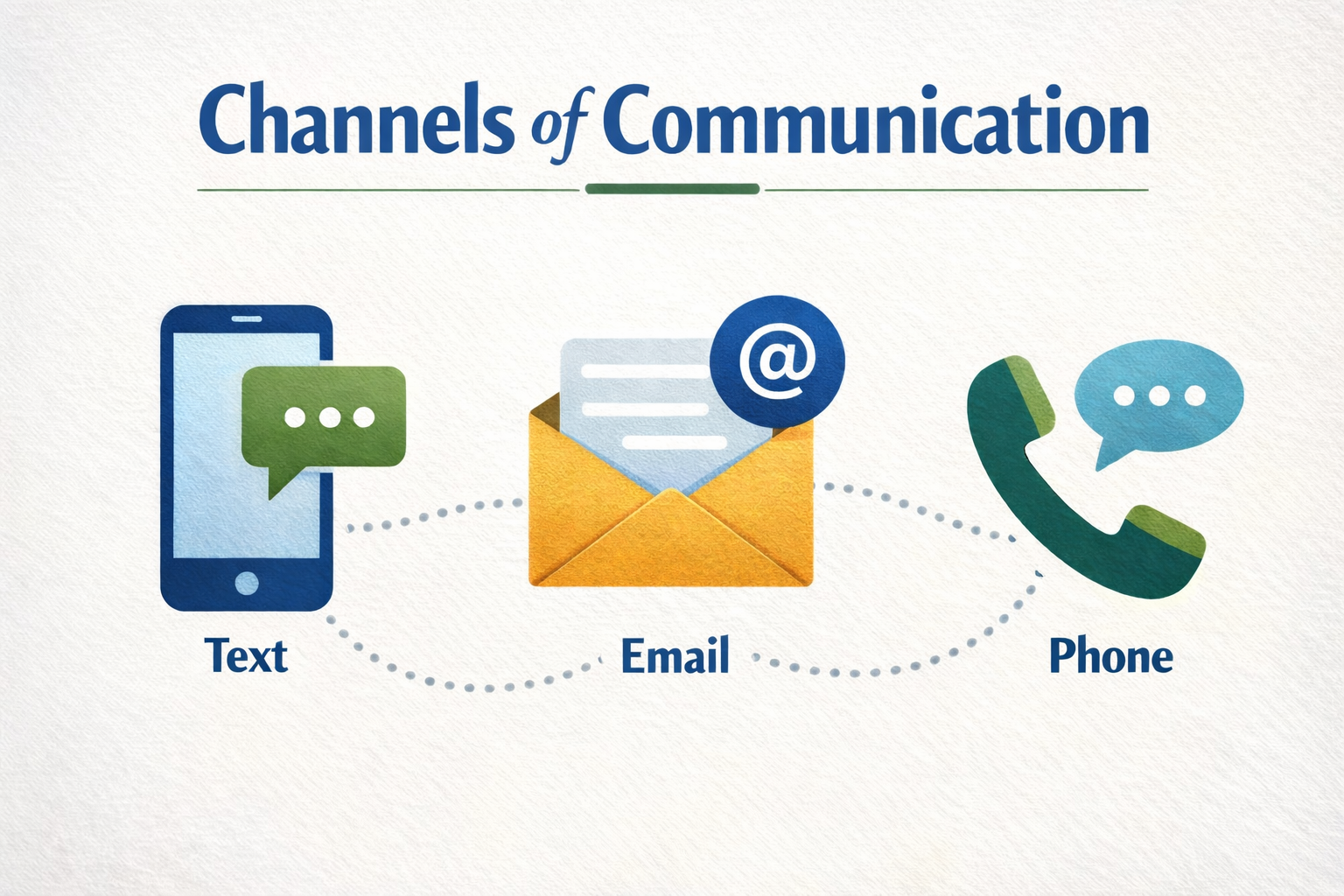
Residents should always know how and where to reach the right contact. Unclear channels often lead to frustration, delayed responses, and duplicated requests.
Best practices:
Provide one central association email address or resident portal for routine communication.
Define how emergencies or after-hours issues are handled and where those instructions are posted.
Post clear contact categories (maintenance, payments, ARC requests, general inquiries) so messages are routed appropriately.
Example:
A Winston-Salem HOA launched an online “Contact the Board” page and reduced duplicate emails by 40 percent.
Step 2: Communicate Proactively and Consistently
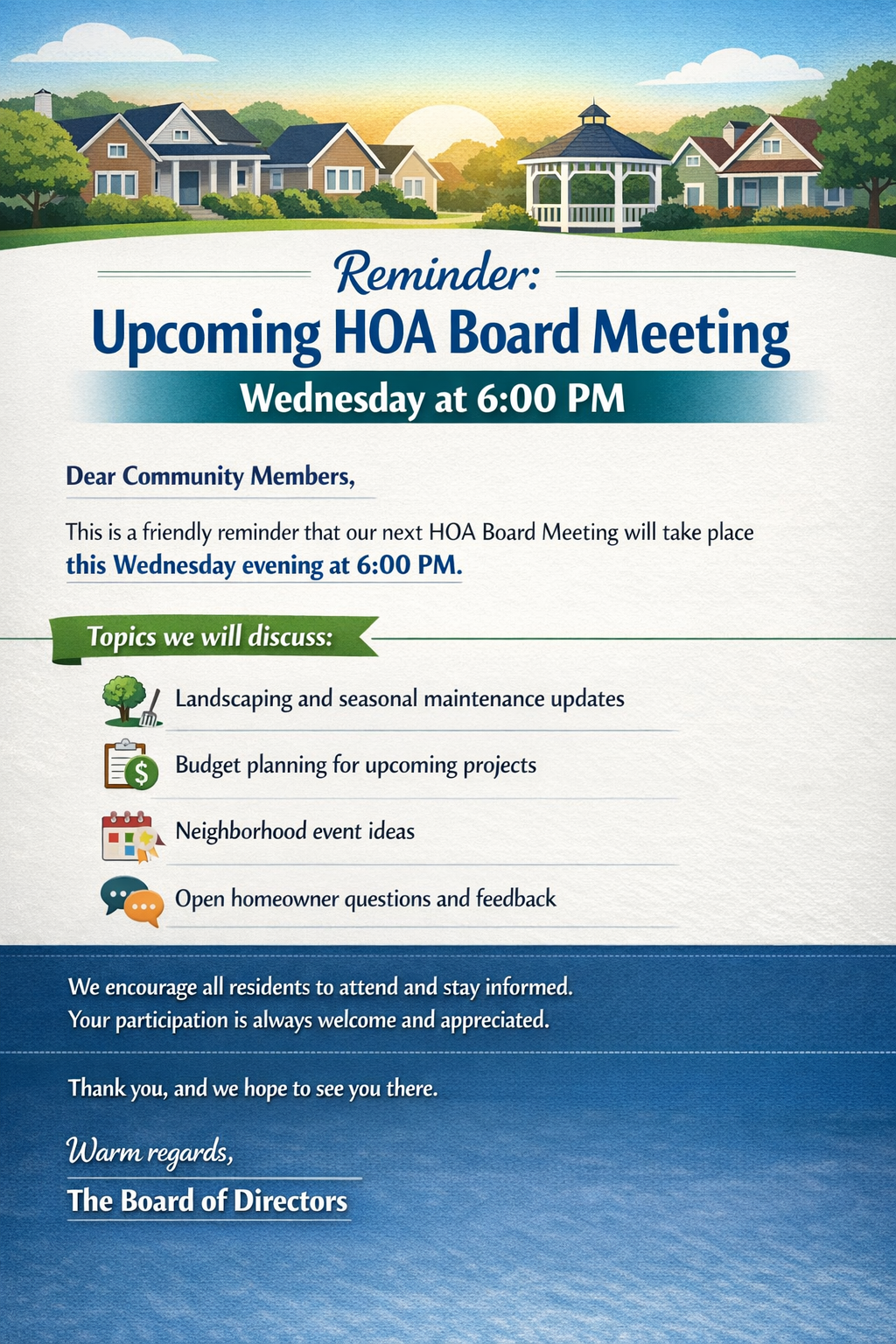
Regular communication prevents confusion and builds credibility. When residents are informed ahead of time, issues are less likely to escalate.
Try:
Monthly newsletters or digital updates that summarize key activities and decisions.
Seasonal reminders about parking, pool access, landscaping schedules, or weather-related policies.
Short text or email alerts for maintenance, meetings, or community events.
Repeating important messages across multiple channels to ensure visibility.
Example:
A Columbia HOA began a monthly “Community Snapshot” email featuring brief updates and a “Did You Know?” section. Residents felt informed, prepared, and appreciated.
Step 3: Keep Messages Clear, Courteous, and Purposeful
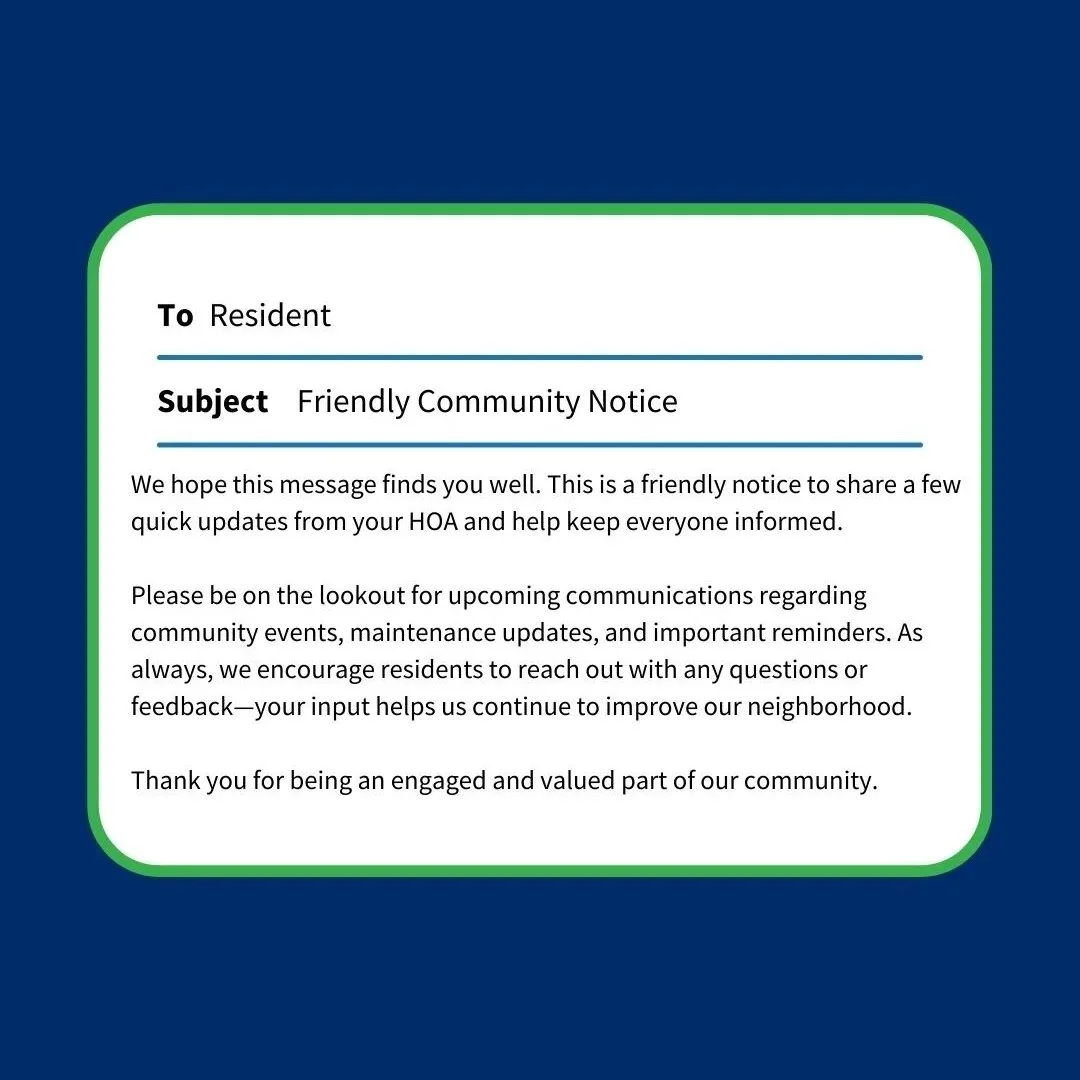
How you say it matters as much as what you say. Clear and respectful communication encourages cooperation and reduces defensiveness.
Guidelines:
Use plain, easy-to-understand language and avoid unnecessary jargon.
Be polite, factual, and concise, especially when addressing violations or sensitive issues.
Lead with the purpose of the message and end with clear next steps or deadlines.
Reference governing documents or policies when appropriate to maintain consistency.
Example:
An Asheville HOA replaced lengthy letters with short, friendly notices. Compliance improved, and resident tone became more positive.
Step 4: Listen and Respond Thoughtfully
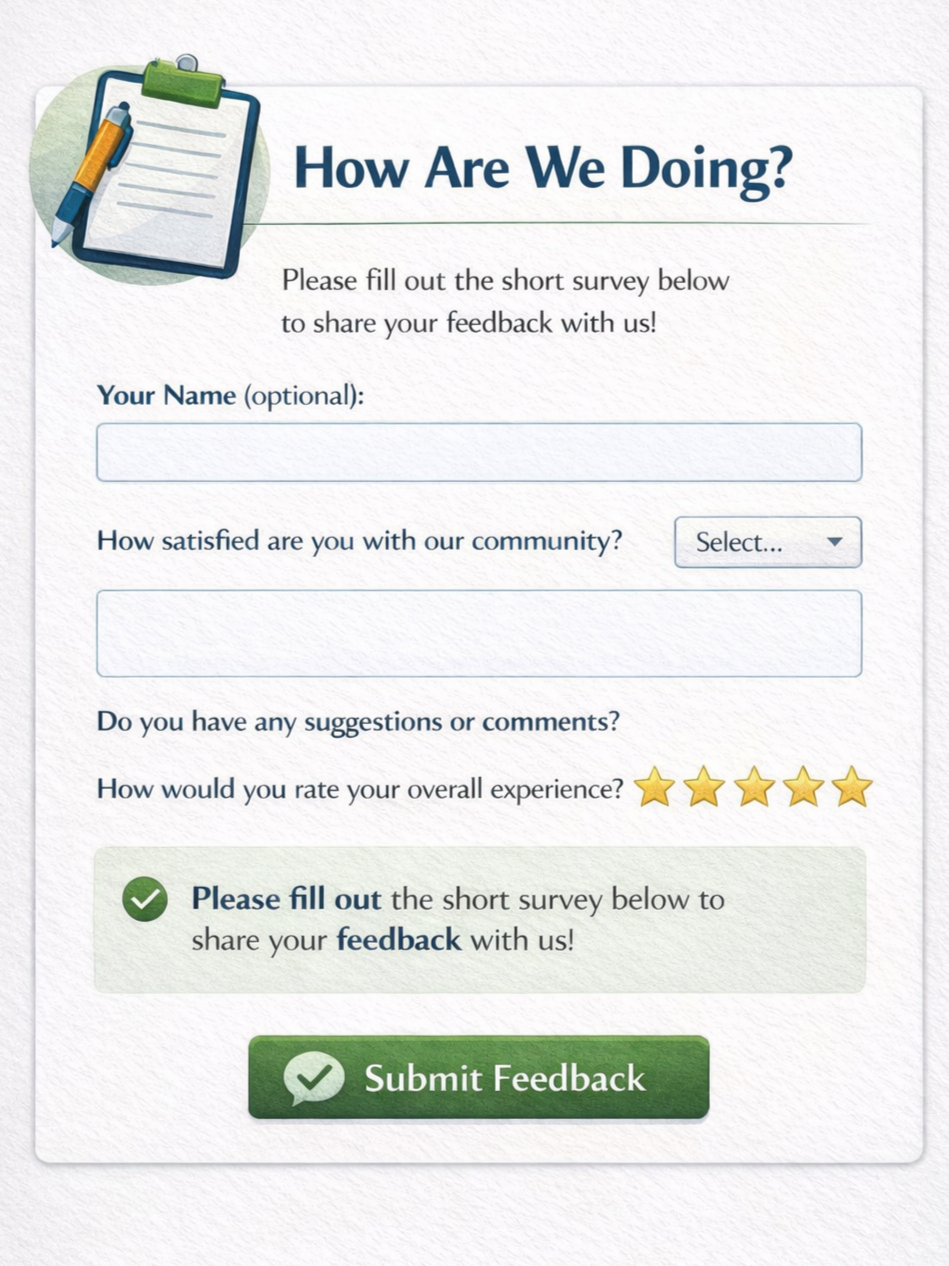
Two-way communication fosters mutual respect and strengthens trust. Residents are more engaged when they feel heard—even when outcomes don’t align with every request.
Ways to listen:
Provide feedback forms or quick online surveys tied to specific topics or projects.
Hold informal Q&A sessions or “Coffee with the Board” gatherings to encourage open dialogue.
Acknowledge messages promptly, even if additional time is needed to resolve the issue.
Track recurring concerns to identify trends rather than reacting to isolated complaints.
Step 5: Use Communication to Build Community Culture
Communication can unite the neighborhood beyond business updates. Positive messaging reinforces pride, belonging, and shared responsibility.
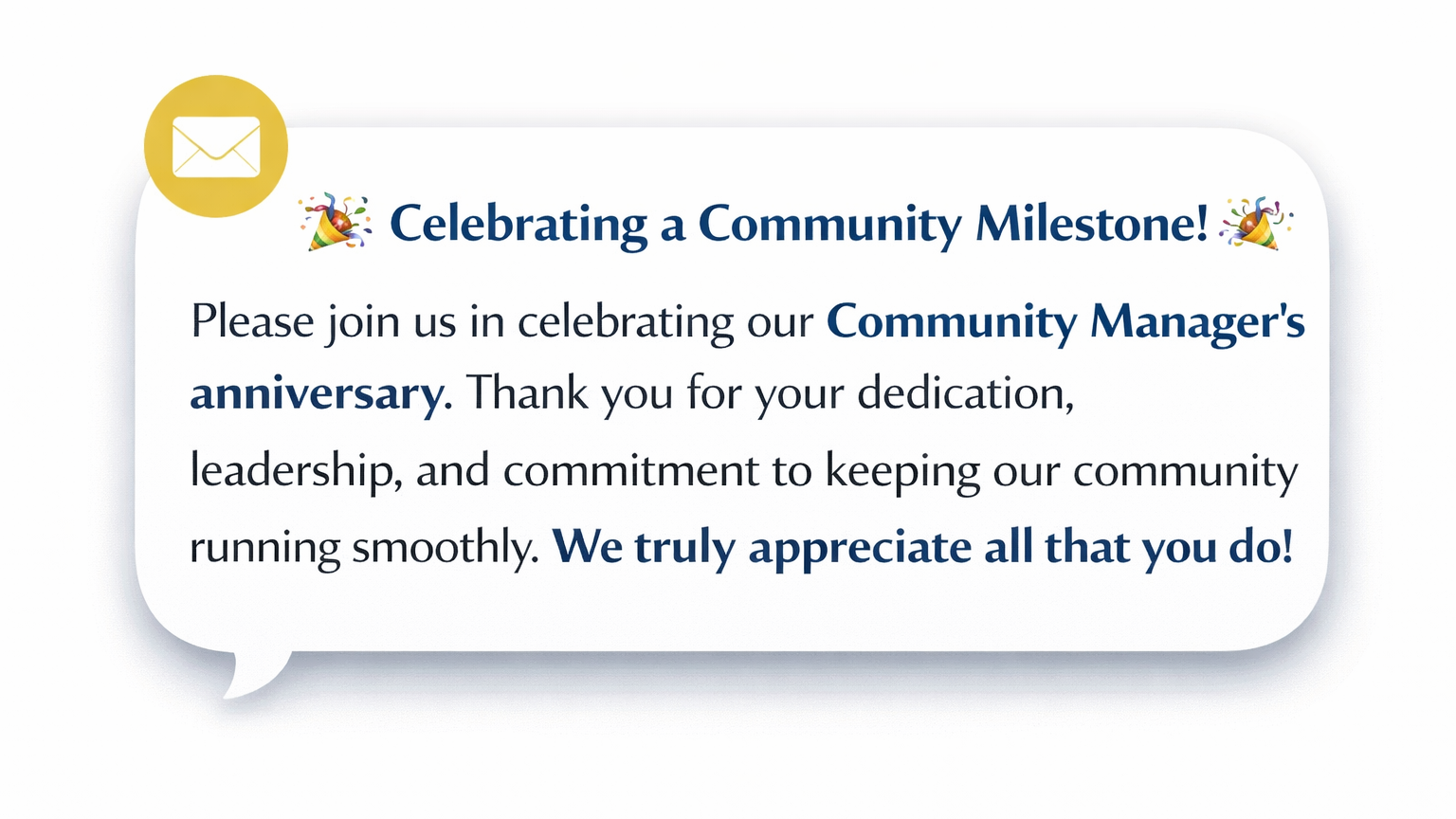
Ideas:
Share “Neighbor Highlights” or volunteer recognition in newsletters.
Celebrate completed projects, anniversaries, or community milestones.
Maintain a friendly, inclusive, and encouraging tone across all platforms.
Balance rule-related notices with messages that acknowledge progress and goodwill.
Example:
A Charlotte HOA introduced a “Good News Corner” celebrating community acts of kindness. Positivity spread quickly across the neighborhood.
Connection Builds Confidence
Strong communication turns a well-run HOA into a well-connected one.
When residents are informed, respected, and engaged, trust follows naturally—and boards are better positioned to lead effectively.
AMG assists boards and property managers by facilitating the systems, templates, and engagement tools that make effective communication easier to sustain over time.
About the Author
Paul Mengert, CEO of Association Management Group, has spent over 40 years helping community associations operate more effectively, transparently, and fairly. He has personally served on HOA and condo boards in both North and South Carolina, bringing a firsthand understanding of the challenges board members face.
Paul is a nationally recognized educator who has trained managers and board members across the Carolinas and in dozens of other states. He teaches decision-making and governance strategies and is a frequent guest lecturer at Wake Forest University School of Law. Named Educator of the Year by the Community Associations Institute, Paul is known for combining deep experience with a practical, solutions-first approach that boards trust. Learn more at AMGworld.com.
-
Scene 1
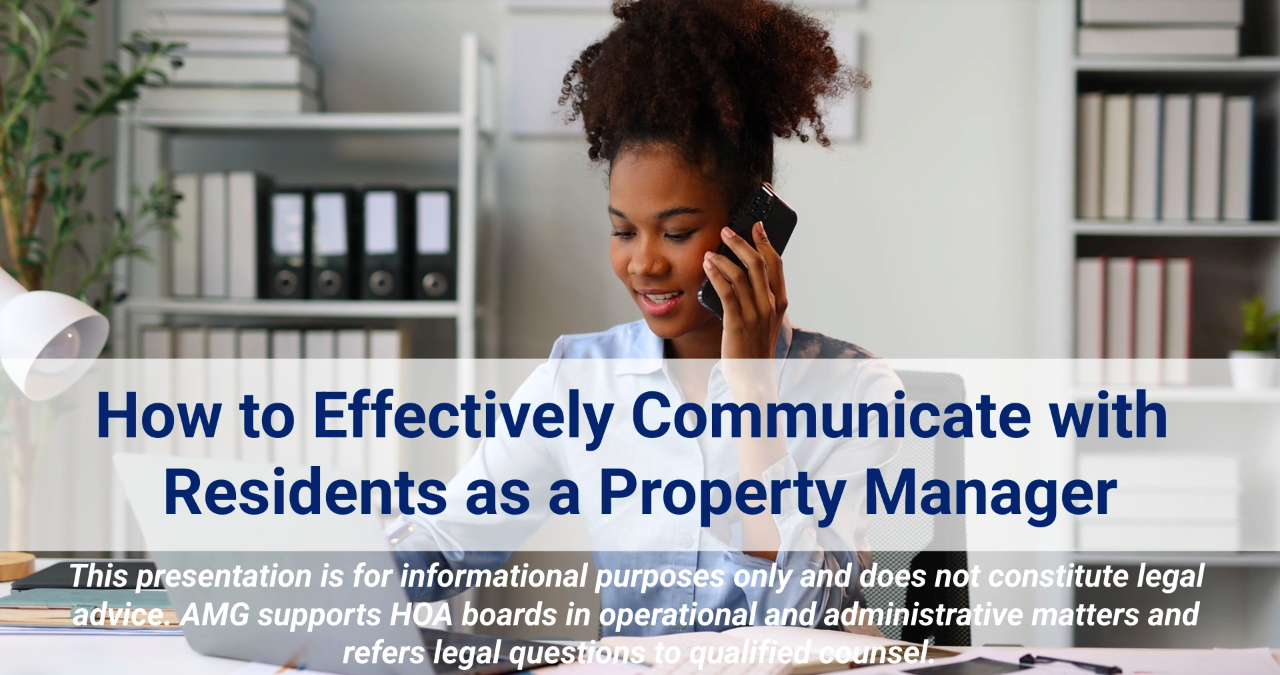
How to Effectively Communicate with Residents as a Property Manager
This presentation is for informational purposes only and does not constitute legal advice.
AMG supports HOA boards in operational and administrative matters and refers legal questions to qualified counsel.
Scene 2
Hello, I'm Paul Mengert, CEO of Association Management Group.
Today, we're talking about one of the most valuable tools any HOA can have — effective communication.
Strong communication is the foundation of well-run communities and positive resident relationships.
Clear, respectful communication keeps residents informed, reduces misunderstandings, and helps communities stay connected and engaged.
Scene 3
Effective communication starts by clearly defining how residents can reach the board or community manager.
A single, easy-to-find contact form, email address, or resident portal helps ensure questions are routed to the right place and addressed efficiently.
When communication channels are clear, residents know where to go — and boards save valuable time.
AMG assists boards by facilitating organized systems that make communication streamlined, accessible, and efficient.
Scene 4
Don't wait for confusion or frustration to arise.
Regular updates, newsletters, and timely maintenance reminders help residents feel informed and prepared.
Proactive communication builds trust and reduces the likelihood of complaints or misunderstandings.
Scene 5
How a message is delivered matters just as much as what it says.
Effective communication should always be direct, polite, and factual.
Short, well-structured messages are easier to read, easier to understand, and more likely to encourage cooperation.
Scene 6
Good communication is a two-way street.
Encourage resident feedback through surveys, open Q&A sessions, or brief community meetups.
Listening helps boards identify concerns early, address issues proactively, and build stronger relationships with residents.
AMG supports boards by facilitating feedback systems and engagement opportunities that promote transparency and trust.
Scene 7
Communication isn't just about policies and rules — it's about relationships.
Sharing good news, recognizing volunteers, and celebrating community milestones helps create a positive and inclusive culture.
These moments remind residents that they're part of something bigger and working toward shared goals.
Scene 8
Strong communication builds strong communities.
When residents feel informed, heard, and respected, HOAs operate more smoothly and relationships thrive.
At AMG, we're proud to assist HOA boards and property managers in developing communication systems that turn management into connection.
To learn more about AMG's communication and engagement resources, visit www.AMGworld.com.
To view our informational pamphlet from this webinar. Click here or on the image.
AMG facilitates community association management and provides educational resources. AMG does not provide legal or financial advice. For questions involving statutes, insurance coverage, or disputes, please consult licensed professionals.