
HOA Holiday Lights in North Carolina: What a Waxhaw Dispute Teaches Boards Before the Season Starts
/
From Charlotte to the Triad, and in boardrooms from Greensboro and Winston-Salem to Burlington and Lake Norman, a neighborhood light show in Waxhaw is back in the headlines. It is the argument we hear from boards every October: one household wants to put on a show, the neighbors are split, visitors are finding the address online, and the roads are private. The governing documents were not written for moving-head lights, a public website, and a line of cars on a narrow street.
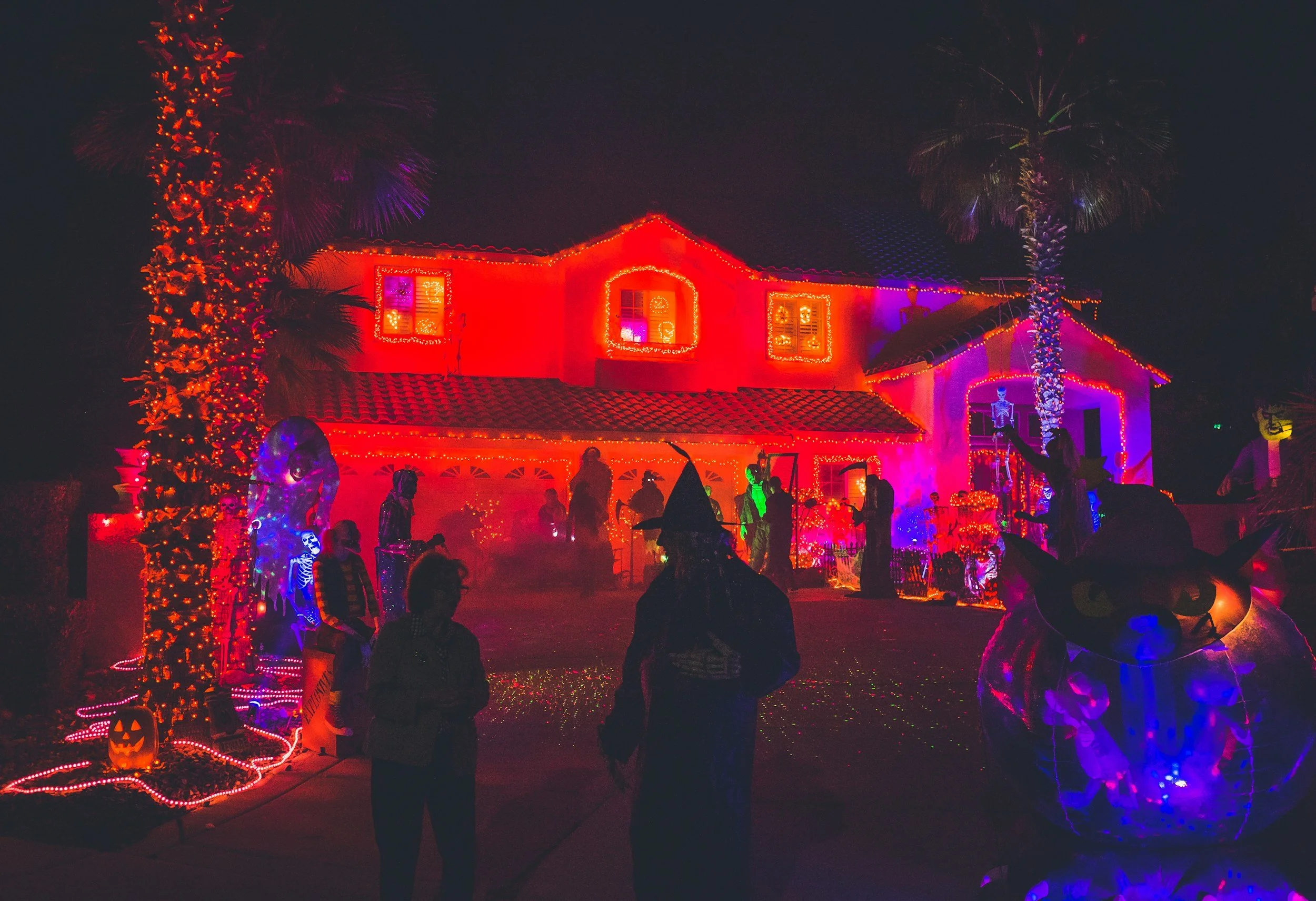
The Charlotte Observer [reported September 17, 2026 (updated September 20)] that a Waxhaw homeowners association had reviewed a family’s 2025 holiday display and stopped short of banning it. The board upheld two of five alleged violations: exterior lighting directed beyond the lot, and an illuminated sign and banner that exceeded the neighborhood’s size limit. According to the Observer, the board found no current guest or parking violation, noting it had not adopted a specific parking standard, and said it is developing guest and parking rules. Questions about nuisance and architectural approval were left open.
According to the Observer, no fine has been imposed for last year’s show. The association has said daily fines of up to $100 could follow if the prohibited lighting or the oversized sign returns. The family’s attorney has offered a narrower show: no more than 30 percent of maximum brightness, removal of two 350-watt moving-head fixtures, and no return of the sign or banner.
The lesson is older than the headline. In our experience, these disputes rarely start with bad intent. They start when the document is silent, the standard lives in someone’s head, and the season arrives before the board has decided what it will actually enforce.
The display is not the whole problem
The community is an upscale neighborhood in Waxhaw, on the edge of the Charlotte market. Homes there have recently sold in a range the Observer put at roughly $870,000 to $1.85 million. The family’s show is not a string of lights on a shrub. The Observer reported a public-facing website and social posts, and a neighbor’s account that the soundtrack had moved from outdoor speakers to a low-power FM frequency so people in their cars could hear it and the street could not. One neighbor told the paper, “Let the man have lights.” The next-door neighbor was more measured. The lights hadn’t much affected him, he said, but a narrow private road can get tight if the crowd grows and nobody manages it. Both reactions can be true at once.
A festive display can be a gift to the street. The same display, once it is published as a destination, can put unfamiliar drivers on private roads, crowd a cul-de-sac, and leave an emergency vehicle with nowhere to turn. A board that treats this only as a taste question will miss the operational one. A board that treats it only as a traffic question will end up enforcing a rule it cannot find in the declaration.
The board’s split decision maps that distinction. Lighting directed beyond the lot, and a sign over the size limit, were tied to existing restrictions. Guest counts and parking were not treated as a current violation.
We see the same gap in Charlotte, Greensboro, Winston-Salem, and in smaller communities such as Burlington and Lake Norman. The street names change. The missing seasonal standard does not.
What the documents usually control, and what they do not
Most North Carolina declarations were drafted to protect architectural consistency, not to regulate a synchronized show. The clauses that actually decide these cases tend to be plain. Exterior lighting may not be directed outside the lot, or may not create glare onto another lot or the street. Signs and banners have a size limit, and illuminated signs are often banned or tightly limited. Exterior alterations, including permanent mounts, trusses, and new electrical equipment, need architectural approval. Nuisance language covers noise, light, or activity that unreasonably interferes with neighbors. Use restrictions may limit commercial activity. A free display is not automatically a business, but a display promoted to the general public can start to look like one.
What most documents do not do is define a holiday exception. They do not say when lights may go up, when they must come down, whether inflatables are allowed, whether music is permitted, or what happens if the show draws people who do not live there.
Silence is not permission, and it is not a standard a board can invent at the hearing.
If the restriction prohibits lighting “directed outside” the lot, a board can enforce that language. It should not stretch the same sentence into a ban on any light a neighbor can see. Visibility and direction are different facts. Measure the beam against the recorded restriction.
Fines come after the hearing, not before it
For planned communities governed by the North Carolina Planned Community Act, the fine process is set out in the statute.
The Planned Community Act provides that “Unless a specific procedure for the imposition of fines… is provided for in the declaration, a hearing shall be held before the executive board or an adjudicatory panel appointed by the executive board. . . .” It adds that “the lot owner charged shall be given notice of the charge, opportunity to be heard and to present evidence, and notice of the decision.” ([G.S. 47F-3-107.1], as of October 2026)
“If it is decided that a fine should be imposed, a fine not to exceed one hundred dollars ($100.00) may be imposed for the violation and without further hearing, for each day more than five days after the decision that the violation occurs.”
Condominiums have a parallel framework under Chapter 47C. How these provisions apply depends on your declaration, your community’s age, and the facts, so review any fine with your association’s attorney before it’s imposed.
A hearing is the record. According to the Observer, the board heard five alleged violations on September 3, upheld two, found no current guest or parking violation, and deferred the nuisance and architectural questions.
Enforcement still has to be consistent. If other lots run bright displays, inflatables, or illuminated signs and only one owner is noticed, the association will spend the winter explaining the difference. Sometimes there is a real difference, in scale, in promotion, in light crossing the lot line, or in a fixture that was never submitted. Say so, in writing, at the hearing. A rule enforced against one house and ignored on the next street is how a seasonal disagreement becomes a selective-enforcement defense.
As AMG founder Paul Mengert writes in Boards, Bylaws, and Better Governance, “Don’t use a bulldozer when a garden shovel will work.” A fine is the heavy tool. A written standard, applied the same way on every street, is usually the one that keeps the community intact.
Private roads do not enforce themselves
The neighborhood’s roads are privately owned. That fact matters, and it is often misunderstood.
Private ownership does not, by itself, answer whether a guest may drive in to see a display. Some declarations and rules restrict access. Many do not. If the rule is not written, a board should not act as if it is.
What a board can do is more ordinary, and in our experience more effective:
Adopt a parking rule before the season, with fire-lane and emergency-access language the board is willing to enforce on every lot, not only the popular one.
Require a traffic plan when an owner promotes a display to the public: hours, a no-parking side of the street, a turnaround, and a contact person.
Ask the owner to publish the plan wherever the address is published.
Coordinate with law enforcement or off-duty coverage if volume becomes a safety issue, and decide in advance who pays. An association is not responsible for law enforcement or personal safety.
Traffic is a management problem. It becomes a covenant problem only when the documents, or a properly adopted rule, say so.
Five decisions to make before the first inflatable goes up
Boards that wait for a complaint will spend December in hearing notices. Boards that write the seasonal rule before November will spend December answering easier questions. That is as true on a Triad cul-de-sac as it is in Waxhaw, Burlington, or Lake Norman. Before adopting a seasonal rule, have counsel confirm it fits within your declaration.
Write the holiday window. Many communities choose a window such as installation no earlier than mid-November and removal within two weeks after New Year’s Day, with a separate and shorter window for other holidays. Halloween displays need their own dates. If the community wants to allow them, say so.
Separate décor from fixtures. String lights and a wreath are not the same thing as trusses, moving-head lights, or a new electrical service. Temporary décor can sit inside a published guideline. Equipment that stays up, penetrates the structure, or aims a beam off the lot should go through architectural review.
Define the light standard in plain words. Warm-white, directed onto the owner’s own lot, off by a stated hour. No beam projected onto a neighboring lot, the street, or the sky in a way that violates the declaration’s lighting clause. If the board cannot describe the violation without adjectives, it is not ready to enforce it.
Decide the public-show question on purpose. Some communities will welcome a destination display. Most will not, once the cars arrive. Either position is legitimate. The unstable position is silence, followed by a hearing after the website is already live.
Invite the modification before you schedule the hearing. A useful outcome is a proposal the board can accept: lower brightness, removal of the fixtures that throw light off the lot, no oversized sign. A board that can say yes to a specific modification will usually protect the street and the relationship.
What an owner should do before building the show
Owners have a side of this, too.
Read the declaration and the architectural guidelines before the order is placed, not after the first complaint. Ask, in writing, whether the planned display needs approval. Describe the equipment, the hours, the music, and whether the address will be published. A written answer is worth more than a neighbor’s memory of what was allowed in 2014.
If the show is meant for the public, treat the street as part of the design. Where do cars stop? Where do they turn around? What happens if an ambulance needs the lane at 8:15 p.m.? Offering that plan is not an admission that the lights are a violation. It is how a good neighbor keeps a good show.
And if a hearing notice arrives, go. Bring the guideline, the photographs, and a modification you can actually live with. North Carolina’s process gives the owner a hearing for a reason.
A quieter standard
The Waxhaw file is not a morality play about Christmas spirit, and it is not a brief for banning lights. It is a case study in sequence. Start with the documents, then a standard an owner can read before the season, then a hearing that distinguishes what the covenant covers from what the board wishes it covered. A modification can solve the light on the neighbor’s lot and the car in the fire lane. Fines come only if the violation continues after that work has been done.
Associations that follow that order rarely become the story. Associations that skip to the fine usually do.
Clear rules, applied the same way on every street, keep the season about the lights.
Board Member Quick Answers
Can a North Carolina HOA ban Christmas lights?
It depends on the declaration. Many documents don’t address holiday décor directly but do restrict lighting directed off the lot, glare, signs, and unapproved exterior changes. The same kinds of clauses appear in communities across Charlotte, Greensboro, Winston-Salem, Burlington, and Lake Norman.
How much can an HOA fine for holiday lights in North Carolina?
For planned communities under the North Carolina Planned Community Act, “[i]f it is decided that a fine should be imposed, a fine not to exceed one hundred dollars ($100.00) may be imposed for the violation and without further hearing, for each day more than five days after the decision that the violation occurs.” (G.S. 47F-3-107.1, as of October 2026.) That procedure applies unless the declaration provides a specific procedure. Condominiums are governed separately, under Chapter 47C.
Can an HOA stop visitors from coming to a light show?
Only if the governing documents or properly adopted rules restrict access or parking, and only by enforcing those provisions consistently.
Should holiday displays go through architectural review?
Temporary, removable décor often falls under a published seasonal guideline. Mounted equipment, structural attachments, new electrical work, and lighting aimed beyond the lot should be submitted.
When should a self-managed board get help?
When the seasonal rule is unwritten, the hearing file is thin, or the board is being asked to invent a standard after the website is already live. That is a management problem, not a December personality problem.
For the board that would rather not learn this in a hearing
Is your board facing a rule dispute, or heading into the season without a written standard? You do not have to invent the process after the first complaint. Contact Association Management Group to see how professional community management brings clarity, consistency, and a calmer calendar to neighborhoods across Charlotte, Greensboro, Winston-Salem, Burlington, Lake Norman, and North Carolina.
Association Management Group has worked with community association boards across North Carolina and South Carolina since 1985. This article is general education for board members and owners. It is not legal advice, and it is not a comment on the merits of any pending enforcement matter. Boards should review their declaration, rules, and hearing procedure with association counsel before adopting a seasonal lighting policy or issuing a fine.