
The HOA Manager and Board Relationship: How Strong Partnerships Evolve in Carolina Communities
/
There is a structural oddity at the center of community association management that almost no one outside the industry fully appreciates. The community manager is expected to lead, anticipate problems, bring hard truths into the room, and keep the association moving forward. Yet the manager holds no vote, sets no policy, and serves entirely at the pleasure of the very group they are trying to guide.
Recent Harvard Business Review research on how CEO and board relationships evolve, moving through distinct phases of trust-building, growing influence, and eventual succession, maps surprisingly well onto the daily reality of community managers and HOA board presidents across Greensboro, Charlotte, and communities throughout the Carolinas. The dynamics are familiar. The setting is different. And the differences are where the practical lessons live.
What is the manager-board relationship in an HOA? It is the working partnership between a community association's volunteer board of directors, which holds the legal decision-making authority, and its professional community manager, who provides operational expertise and carries out the board's direction. The board governs; the manager manages. When the relationship works, the community gets both sound decisions and sound execution.
Why This Partnership Is Unlike Anything in the Corporate World
A corporate CEO typically works with a board whose membership changes slowly and whose members were recruited for specific expertise. A community manager works with a board of volunteers elected by their neighbors, people who may or may not have governance experience and whose composition can change substantially at a single annual meeting. A partnership that took three years to build can be reset in one election night.
That reality shapes everything. A community manager's authority is borrowed: it is granted by the board and renewed, or quietly withdrawn, at every meeting. Managers who understand this treat trust as a perishable asset, something that must be re-earned with each new director rather than banked once and drawn on forever. Boards who understand it recognize that continuity of institutional knowledge often rests more with the manager and the management company than with any individual volunteer. That is both a strength to use and a dependency to watch.
With over 40 years managing Carolina communities, we have found that the manager-board relationships that endure are not the ones that avoid friction. They are the ones where both sides understand which role owns which decisions, and where that understanding gets refreshed every time the cast changes.
The Early Season: Earning the Right to Be Heard
Every new manager-board pairing begins in roughly the same place, whether the community is in Winston-Salem or Columbia. The board does not yet know whether the manager's judgment can be trusted, and the manager does not yet know how this particular board thinks, decides, and communicates. The work of this phase is unglamorous: learn each director as an individual, not just as a seat at the table.
The practical moves are simple to describe and easy to skip. A short one-on-one conversation with each director early in the relationship reveals what a year of meetings might not: who worries most about finances, who carries history from a past dispute, who wants detail and who wants summaries. Just as important is settling expectations out loud. How far in advance does the board want materials? What decisions does the board expect to make, and what does it expect the manager to simply handle and report? Most early friction between boards and managers traces back to expectations that were assumed rather than stated.
Boards have work to do in this season as well. A board that treats a new manager purely as a vendor to be supervised will get vendor-level performance. A board that shares its priorities, its history, and its concerns openly gives the manager the raw material to become a genuine partner.
The Working Years: When the Manager Becomes a Partner
As credibility accumulates, the relationship changes character. The board stops asking whether the manager's recommendations are sound and starts asking the manager to help frame the questions themselves. Meeting agendas shift from status reports toward the decisions where volunteer judgment adds real value: reserve priorities, policy questions, long-range planning. A seasoned manager also learns to use the board president as a sounding board between meetings, testing how an issue might land before it arrives on an agenda.
It is worth naming an honest debate here, because reasonable people in our industry disagree about it. Some believe a manager should remain strictly execution-focused, offering information but never shaping the board's agenda or nudging its composition of skills, on the theory that influence belongs solely to elected volunteers. Others believe an experienced manager who watches a board struggle without a finance-minded director, or a president who can run a meeting, has a professional obligation to raise it. Both views protect something important: the first protects the board's autonomy, the second protects the community's outcomes. In our experience the resolution is transparency. A manager who shares observations openly, in front of the full board, and leaves the decision entirely with the volunteers, serves both principles at once. A manager who maneuvers privately, however good the intent, eventually spends trust faster than any result can replace it.
The Comfort Trap: When Trust Turns Into Silence
Here is the phase almost nobody warns managers or boards about. Deep trust, the thing everyone worked years to build, carries its own quiet risk. When a board has approved the manager's recommendations for long enough, directors can stop examining them. Questions start to feel impolite, even disloyal. Meetings get shorter and smoother, and everyone mistakes the smoothness for health. The absence of friction begins to feel like success, and that is precisely when a board is at its most vulnerable.
We watched this unfold in one community we worked with over many years. The board and its longtime manager had an excellent relationship, and for several consecutive budget seasons the board adopted the proposed budget with barely a question asked. Then a new treasurer joined the board, a retired accountant, and she did what new treasurers do: she asked about assumptions behind the insurance line, the contribution to reserves, the contingency figure. The room tensed. A couple of veteran directors read her questions as an attack on the manager. The manager, to her credit, read them as exactly what a board is for, answered every one in writing, and thanked the treasurer publicly at the next meeting. Two of the assumptions, it turned out, deserved updating. The budget got better, and so did the board, because the other directors relearned that scrutiny and trust are not opposites.
The healthiest sign in a long manager-board relationship is not agreement; it is that hard questions are still being asked. As Paul Mengert writes in Conversations, Conflict, and Better Culture, the fourth volume of the Lessons from the Neighborhood series, "Board culture is not established by intention. It is established by tolerance." A board that tolerates silence will get silence. Managers can help by explicitly inviting challenge, circulating alternatives they considered and rejected, and treating the director who pushes back as an asset rather than a problem.
Elections, Transitions, and the Reset Button
Every partnership in this industry ends or transforms eventually. Board members term out, move away, or simply decline to run again. Managers are promoted, retire, or transition to new portfolios. The communities that handle these moments well share one habit: they start the conversation before it is urgent.
For boards, that means treating director recruitment and officer succession as a standing topic rather than an annual scramble, so that the skills the community needs are being cultivated before a resignation letter forces the issue. A simple, concrete practice helps: at the first regular meeting after the annual election, place a 20-minute agenda item titled "Manager and Board Expectations Reset." Use it to restate mutual expectations while the new configuration is still fresh. We explore this at length in Conversations, Conflict, and Better Culture, which devotes a full chapter to leadership succession and continuity; the series, which carries a foreword by Dawn M. Bauman, CAE, Chief Executive Officer of the Community Associations Institute, is available at www.LessonsFromTheNeighborhood.com.
For managers and management companies, it means documenting institutional knowledge thoroughly enough that a transition costs the community continuity of personality, not continuity of information. Meeting cadence preferences, decision history on recurring issues, and key vendor context are practical starting points. And when a longtime manager does move on, the graceful final act is the same one the research describes for departing CEOs: prepare the ground, then step back and let the board own the choice of what comes next.
Boards evaluating how these transitions should work, or wondering what a well-supported manager-board partnership looks like in practice, can find additional governance resources for Carolina communities at www.amgworld.com.
If you're already working with AMG, reach out to your community manager. This is exactly the kind of conversation they are equipped to have with your board. If you're exploring options, our client services team is happy to point you toward qualified professionals or other resources, whether or not that leads to working with us.
Frequently Asked Questions
What is the difference between an HOA board and a community manager?
The board of directors is the elected body that holds legal authority to make decisions for the association, from budgets to policies to contracts. The community manager is a professional engaged by the board to provide expertise, coordinate operations, and carry out the board's decisions. The manager advises and executes; the board decides.
How can an HOA board build a better relationship with its manager?
State expectations explicitly rather than assuming them: what decisions the board wants brought to it, how much detail directors need, and how far in advance materials should arrive. Invest in individual conversations early, especially when new directors join. And protect the manager's ability to deliver unwelcome news, because a manager who is punished for candor will stop offering it.
What should happen when a new board is elected in an HOA?
Treat the transition as a partial restart of the manager-board relationship, not a continuation by default. An orientation for new directors, a fresh review of mutual expectations, and one-on-one introductions between the manager and each new director help a rebuilt board reach productive trust in months rather than years.
Paul's Key Guidance
If you manage communities, put a date on your calendar within two weeks of every annual meeting to sit down individually with each new director, before the first regular board meeting, not after. The relationship you build in that window will determine how the next year goes, and it cannot be built from the far end of a meeting table.
If you serve on a board, ask yourself one uncomfortable question this quarter: when did a director last challenge a management recommendation in open session, and what happened next? If the answer is that no one can remember, do not congratulate yourselves on harmony. Assign someone to argue the other side of the next significant recommendation, and thank them for it publicly. The strongest partnerships we have seen across four decades are the ones that never stopped testing themselves.
About the Author
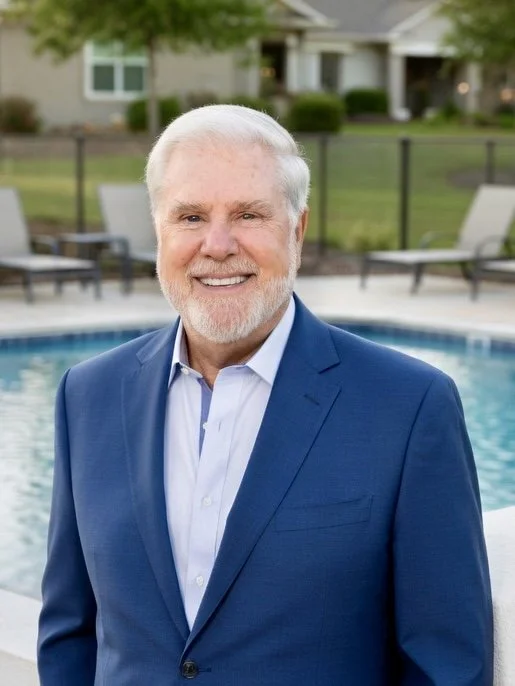
Paul Mengert, CMCA®, PCAM®, is a visionary leader, award-winning educator, and transformative strategist in community association management. With over 40 years of experience, he is the founder and CEO of Association Management Group (AMG), an AAMC®-accredited firm that began in 1985 with three Greensboro, North Carolina, associations, and is now a leading, nationally respected management company. Today, AMG serves over 30,000 property owners across the Carolinas, supporting the volunteer boards that steward communities with a combined asset value exceeding $5 billion.
Paul was named a Community Associations Institute (CAI) Educator of the Year and serves as senior faculty there. He is a longtime guest lecturer at Wake Forest University School of Law and teaches in the Harvard Business School alumni program at Queens University, focusing on the intersection of governance, finance, law, and human dynamics.
Paul's influence extends beyond community associations. He has advised the US Department of State on housing initiatives in the former Soviet Union and served five terms as Chair of the Piedmont Triad International Airport Authority. Under his leadership, the airport became a dynamic aerospace and innovation hub, attracting major global players in aviation and advanced manufacturing.
Recognized as a "Most Admired CEO" by the Triad Business Journal, Paul is the author of the acclaimed Lessons from the Neighborhood book series. Through writing, speaking, and consulting, he equips community leaders with practical frameworks for governance excellence, while preserving the human touch that makes neighborhoods thrive.
Paul Mengert doesn't just manage communities: He builds strong, smart, resilient community leaders.
Learn more at www.amgworld.com and www.LessonsFromTheNeighborhood.com.