
HOA Reform Legislation Is Not A Panacea: What Strong HOA Boards Should Do in the Meantime
/Updated August 2026

In recent legislative sessions proposals to change the law governing what North Carolina's community associations can and must do have been proposed. have been . Some pass one chamber without a single dissenting vote. As is the case with many bills, most never become law. For the volunteers who govern communities from Greensboro to Charlotte and across the state, that pattern raises a practical question with little to do with politics: what should a board do while lawmakers decide what, if anything, to require?
A note before we begin. We write as community association management practitioners, not attorneys, and nothing in this article is legal advice. Bills and statutes change, governing documents vary widely, and how any law applies to a specific community is a question for qualified legal counsel.
HOA Legal Reform is Complicated for Many Reasons
Most HOA reform bills are challenging for two structural reasons in addition to the reasons that most legislation that is introduced does not ultimately become law. First, a single statute must govern thousands of very different communities, from associations of a few homes that maintain little more than an entrance sign to master-planned developments responsible for roads, pools, and stormwater systems. Second, there is no easy answer to the question of who would enforce new oversight, what authority that office would hold, or how it would be funded.
The recent history illustrates both challenges. Senate Bill 378 passed one chamber last session. As reported, it would have limited certain violation fines, restricted foreclosure based solely on unpaid fines, and required mediation before certain disputes could proceed to court. It stalled in the other chamber.as many bills do. This session House Bill 1174 proposed to direct the Department of Justice to collect and track HOA complaints, though it would not give the agency authority to regulate associations or resolve disputes. As of this writing, it remains in committee. We reviewed the current session's proposals in more detail in our recent update on the 2026 HOA bills. Pending legislation moves quickly, so anyone relying on a bill's status should verify it at www.ncleg.gov or with counsel.
The pattern has exceptions, and fairness requires noting them. This year, lawmakers strengthened the protections for displaying the American and North Carolina flags that appear in both the Condominium Act and the Planned Community Act. The change was included in a broader regulatory reform measure, Senate Bill 445 ( Session Law 2026-59). That is the shape change usually takes in this field: narrow provisions with broad
consensus cross the finish line, sometimes as a part of bills addressing many subjects, while sweeping HOA reform packages stall. Boards adopting or enforcing any rule that applies to flags should review the updated law with counsel before acting.
Both sides of this debate are legitimate. Homeowners who feel outmatched in a dispute with their association often have few affordable remedies, and their frustration is real. Associations depend on assessments to fund insurance, utilities, and shared infrastructure, and requirements designed for large professionally managed communities can overwhelm a small volunteer board. Homeowner advocates and association professionals disagree in good faith about which remedies would help and which would create new problems. That disagreement, as much as any procedural hurdle, can be why so many bills stall.
What North Carolina's HOA Reform Proposals Keep Asking For
Look past the bill numbers and a pattern emerges. Session after session, the proposals reach for a similar set of outcomes: restraint in imposing fines, foreclosure treated as a genuine last resort, a real opportunity for owners to be heard, easier access to association records, and a visible place for complaints to land. Read together, North Carolina's stalled HOA reform bills sketch a consensus picture of what fair community governance looks like.
Reasonable people differ over whether any particular bill gets the mechanics right, and we make no argument here about what the General Assembly should pass. Our point is narrower. The practices these bills propose do not require a statute. A board can adopt every one of them voluntarily because they are simply sound governance.
The Standard Well-Run Boards Already Meet
With over 40 years managing Carolina communities, we have found that the strongest boards never wait for the law to require fairness. They build it into written policy: a violation process that begins with a courtesy notice, escalates deliberately, and guarantees a hearing before any penalty is imposed. They apply rules consistently, whether the owner involved is a friend, a stranger, or a fellow director. And they document decisions well enough that a future board could understand exactly what was done and why.
Levying a finedeserves particular care, because it is where enforcement most often goes wrong. We explore this at length in Boards, Bylaws, and Better Governance, the first volume of the Lessons from the Neighborhood series. (www.LessonsFromTheNeighborhood.com), where I wrote that "fines work best when they function as a calibrated nudge toward compliance rather than a punitive revenue stream." Some boards go a step further and suspend a fine once the violation is corrected, which keeps the focus where it belongs, on resolving the problem rather than punishing the person.
We once worked with a townhome association where one owner had ignored three notices about a trailer parked beside his unit. By the time the hearing was scheduled, several directors had privately settled on the maximum fine the documents allowed. They were tired of the issue, and honestly, we understood why.
The hearing changed the room. Following the association's written policy, the owner spoke first. He explained that the trailer had belonged to his late brother, that the estate was unresolved, and that he had nowhere to store it while the family sorted things out. He was not defiant. He was overwhelmed. The directors asked a few careful questions, thanked him for coming, and deliberated privately afterward, exactly as their policy required.
Their decision gave him sixty days and suspended any fine on the condition the trailer was gone by then. It was gone in forty. No fine was ever collected, no attorney was ever needed, and the owner later volunteered for the landscaping committee.
Notice what happened in that room: restraint in fining, a genuine opportunity to be heard, and a resolution far short of escalation. Those are the very outcomes reform bills keep reaching for, and this board delivered them with nothing more than a written policy and the discipline to follow it. As I remind readers throughout the book: process is your armor.
How Carolina Boards Can Prepare Now
Whatever Raleigh does next, the responses to four recurring questions are entirely within a board's control.
Do we have a clear written violation policy?
Does every owner receive a genuine opportunity to be heard before a penalty is imposed?
Would our documentation demonstrate consistency if anyone ever examined it?
Could we produce appropriate association records promptly if an owner asked?
A board that can answer yes to all four has already met the standard of most reform proposals, and it has done so on its own terms.
Preparation also means knowing the framework already on the books. North Carolina communities generally operate under the Planned Community Act (Chapter 47F) or, for condominiums, the Condominium Act (Chapter 47C) or the older Unit Ownership Act (Chapter 47A), with the Nonprofit Corporation Act (Chapter 55A) working quietly in the background. Our plain-language guides to North Carolina HOA laws at www.amgworld.com, beginning with the Planned Community Act guide, walk through these statutes so directors can arrive at their attorney's office with better questions. When an enforcement or collection matter turns serious, involving counsel early is almost always less expensive than correcting a misstep later.
Readers who want to follow the legislation itself can track any bill through the General Assembly's website. The pages for Senate Bill 378 (https://www.ncleg.gov/BillLookUp/2025/S378) and House Bill 1174 (https://www.ncleg.gov/BillLookup/2025/H1174) show each measure's full history and current status, and the text of the enacted flag measure, Session Law 2026-59, is available there as well (https://www.ncleg.gov/Sessions/2025/Bills/Senate/PDF/S445v7.pdf).
If you're already working with AMG, reach out to your community manager. They can help your board review its enforcement policies and records practices against the standards discussed here. If you're not yet an AMG client, our client services team is happy to point you toward qualified professionals or other resources who can help, whether or not that leads to working with us.
Frequently Asked Questions
Are new HOA laws coming to North Carolina?
Proposals appear in nearly every session, and their outcomes are difficult to predict. Occasionally a narrower change does pass, as with a 2026 measure that strengthened flag display protections in the community association statutes. Recent reporting also describes pending measures, including House Bill 1174, which would direct the Department of Justice to collect and track HOA complaints without new enforcement authority. Boards are wise to follow developments each session and to govern well regardless of what passes.
How can an HOA board prepare for changes to North Carolina HOA laws?
Audit the practices reform proposals keep targeting. Adopt a written violation policy, hold a fair hearing before imposing penalties, apply rules consistently, document decisions, and keep association records organized and available. A board that already meets that standard has little to fear from some new legislation, and counsel can confirm how current law applies to your specific community.
Paul's Key Guidance
Two habits will serve your board better than any prediction about the legislature. First, run your enforcement file as though it will someday be read aloud in a committee room in Raleigh. If that thought makes you uncomfortable, the fix is the file, not the hypothetical. In four decades of this work, we have never seen a board regret the notice it sent, the hearing it held, or the minutes it kept. We have seen many regret the shortcut.
Second, assign one director each session to follow association legislation and deliver a five-minute report at the board meeting. Communities are almost never harmed by laws they saw coming; they are harmed by the ones that arrive as a surprise. The boards that fear new legislation least are the ones already governing above it.
About the Author
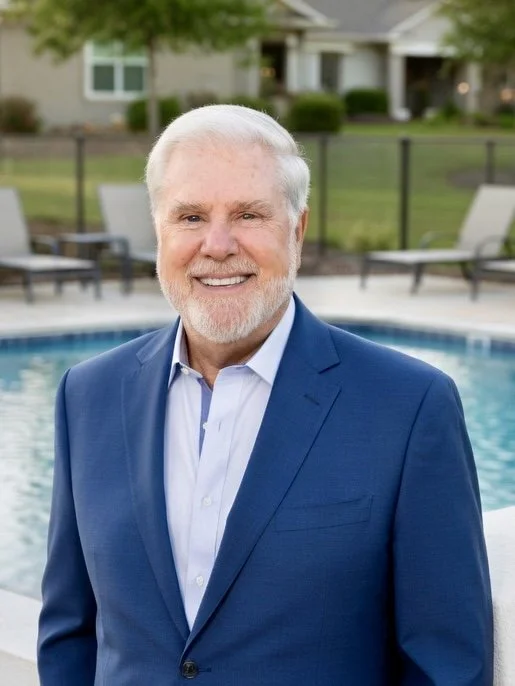
Paul Mengert, CMCA®, PCAM®, is a visionary leader, award-winning educator, and transformative strategist in community association management. With over 40 years of experience, he is the founder and CEO of Association Management Group (AMG), an AAMC®-accredited firm that began in 1985 with three Greensboro, North Carolina, associations, and is now a leading, nationally respected management company. Today, AMG serves over 30,000 property owners across the Carolinas, supporting the volunteer boards that steward communities with a combined asset value exceeding $5 billion.
Paul was named a Community Associations Institute (CAI) Educator of the Year and serves as senior faculty there. He is a longtime guest lecturer at Wake Forest University School of Law and teaches in the Harvard Business School alumni program at Queens University, focusing on the intersection of governance, finance, law, and human dynamics.
Paul's influence extends beyond community associations. He has advised the US Department of State on housing initiatives in the former Soviet Union and served five terms as Chair of the Piedmont Triad International Airport Authority. Under his leadership, the airport became a dynamic aerospace and innovation hub, attracting major global players in aviation and advanced manufacturing.
Recognized as a "Most Admired CEO" by the Triad Business Journal, Paul is the author of the acclaimed Lessons from the Neighborhood book series. Through writing, speaking, and consulting, he equips community leaders with practical frameworks for governance excellence, while preserving the human touch that makes neighborhoods thrive.
Paul Mengert doesn't just manage communities: He builds strong, smart, resilient community leaders.
Learn more at www.amgworld.com and www.LessonsFromTheNeighborhood.com.