
HOA Governance in North Carolina: What the Proposed House Bill 1212 Could Change
/
The proposed House Bill 1212 has sparked important discussion across North Carolina.
It is important to be clear.
This bill has not passed the legislature and has not been signed into law. It remains a proposal as of May 1, 2026. Still, community leaders should pay attention to what it represents.
What the Proposal Seeks to Do
House Bill 1212 would limit an association’s ability to regulate:
Solar panels
Edible or pollinator gardens
Accessory dwelling units that comply with zoning and building codes
The policy direction reflects growing interest in sustainability and housing flexibility. Many homeowners and boards support those goals.
Where the Real Question Lies
The issue is not whether these uses should exist.
It is who decides how they are implemented.
Community associations are built on shared agreements that guide property use and expectations. These agreements are not perfect, and not every owner fully understands them at purchase. Even so, they create a structure that allows communities to function with consistency.
Research from the Community Associations Institute continues to show that the vast majority of homeowners report satisfaction with their association leadership and management.
Across the state of North Carolina and through its major metropolitan areas, including Charlotte, Greensboro, Winston-Salem, and Raleigh, most communities are operating effectively under local governance.
Why One-Size-Fits-All Governance Is Challenging
Community associations are not uniform.
Across North Carolina, and in metropolitan areas like Charlotte, Greensboro, Winston-Salem, and Raleigh, communities vary widely in design, density, infrastructure, and homeowner expectations.
What works in one neighborhood often does not translate cleanly to another.
We have seen this play out within communities themselves.
In one association, a board attempted to standardize a policy across all sections of the neighborhood to simplify enforcement. On paper, it made sense. In practice, the sections had different layouts, different parking realities, and different homeowner expectations. What was reasonable in one area created friction in another. The board eventually had to revisit the policy and tailor it more carefully.
That experience is not unique.
Uniform rules can be efficient.
Communities, however, are rarely uniform.
This is where local governance tends to matter most. Boards, working with their residents, are usually in the best position to balance flexibility with the practical realities of their specific neighborhood.
Keeping Governance Where It Belongs
Most governing documents already provide a process for change. If homeowners want to allow different uses, they can amend their covenants.
That process is not always easy, but it serves an important purpose.
It keeps decision-making within the community, with the people who live there and experience the outcomes.
Legislative policy plays a role. But community associations function best when neighborhood decisions remain in the neighborhood.
Paul’s Key Guidance
Boards should view proposals like this as a signal.
When communities approach requests reasonably and with consistency, it reduces the likelihood of outside intervention. Take a fresh look at how your board handles solar, gardens, and similar requests. Where flexibility makes sense, consider it.
Fair, thoughtful decision-making is not just good governance.
It is what helps preserve the ability for communities to govern themselves.
About the Author
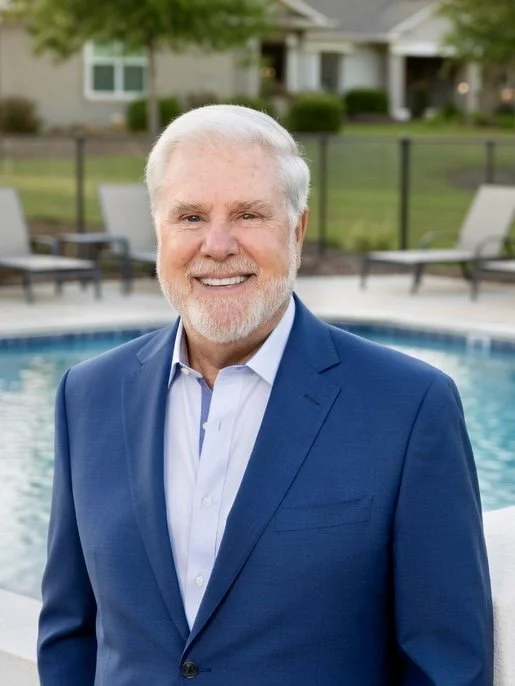
Paul Mengert is a premier educator and strategist with over 30 years of expertise in community association management. As CEO and founder of Association Management Group (AMG), an AAMC®-accredited firm, he is a CAI Educator of the Year and a PCAM® designee dedicated to elevating professional and volunteer leadership.
A governance advisor and decision maker strategist, Paul teaches at Wake Forest University School of Law and a Harvard Business School alumni program. His global influence includes advising the U.S. Department of State on housing initiatives in the former Soviet Union, chairing the Piedmont Triad International Airport Authority, and founding and serving as CEO of Association Management Group (AMG), earning him the “Most Admired CEO” title from the Triad Business Journal.
Through his book series, Lessons from the Neighborhood, and his work at AMG, Paul provides community leaders with the essential framework to master the intersection of finance, law, and human dynamics.