My HOA bans pets over 40 pounds Is that legal?

HOA pet size restrictions generally must be waived when a resident has a legitimate service or assistance animal under the Fair Housing Act, which requires housing providers to make reasonable accommodations for people with disabilities. Courts have consistently ruled that allowing assistance animals—even in communities with strict pet rules or bans—is a reasonable accommodation if the animal is necessary for the resident’s use and enjoyment of their home. Because of this, weight or breed limits in HOA documents are often overridden when the animal is related to a disability. Although federal guidance on these issues was withdrawn in 2025, legal experts believe courts would likely still favor allowing assistance animals even if they exceed size restrictions.

Read More: Packerswire

When $100 Turns Dangerous: The HOA Fine That Nearly Took a Home

A $100 HOA fine over an alleged “commercial vehicle” parking violation escalated into a yearslong legal battle for Charlotte homeowner Jeffrey Baldwin, including an attempted foreclosure on his home. The case ended when the HOA withdrew its foreclosure petition, prompting Baldwin to call for greater accountability and reform, noting that many homeowners lack the resources to fight similar actions. The situation has drawn attention from state lawmakers, who previously proposed legislation to cap HOA fines and require due process before foreclosure, though the bill stalled in the House. Baldwin’s case highlights growing concerns over HOA enforcement power and the need for clearer protections for homeowners in North Carolina.

Read More: WBTV

Editor’s Note from Association Management Group (AMG):

This case is a timely reminder for community leaders: courts and legislatures are increasingly scrutinizing how associations enforce collections and compliance. While every association has a duty to uphold its governing documents, the methods used—especially in pursuing fines or assessments—matter greatly.

At AMG, we advocate for common-sense restraint and thoughtful decision-making. Before taking legal action, boards should consider a formal review process that weighs not only the amount owed but also the proportionality and potential community impact of the enforcement action.

Associations are strongly encouraged to consult with legal counsel experienced in HOA and condominium law. Legal advisors can help ensure that any action taken is appropriate under current statutes, consistent with the association’s governing documents, and reasonably aligned with the scale of the issue.

When boards act without this kind of deliberate evaluation, they may inadvertently invite legislative reforms that impose inflexible, one-size-fits-all mandates—limiting future discretion in nuanced cases.

AMG remains committed to helping communities navigate these complexities with integrity, fairness, and a long-term view of effective governance.

Managing Short-Term Rentals Without Crossing Legal Lines

Short-term rentals can disrupt community harmony, but in North Carolina the right to rent is strongly protected, making outright bans or renter-specific rules difficult for HOAs to enforce. Courts generally allow STRs unless municipal regulations or the community’s original Declaration clearly restricts them, and new or selective restrictions often fail legal scrutiny. Always consult your attorney for details. 


Instead, HOAs can more effectively manage STR impacts by using legally sound tools such as minimum lease terms, HOA-approved lease forms, holding owners accountable for tenant behavior, and applying rules equally to all residents and guests. With careful drafting, consistent enforcement, and legal guidance, HOAs can balance neighborhood character with owners’ property rights.

Read More: JDSupra

Closed Sessions

This article was originally published by Jim Slaughter for the Law Firm Carolinas Resources Page.

Updated from "Closed Meetings & Community Associations" in the NC Newsletter of the NC Community Associations Institute (CAI)

[W]e are as a people, inherently and historically opposed to secret societies, to secret oaths, and to secret proceedings." Despite this advice from President Kennedy, “secret proceedings” are not uncommon in community associations. Homeowners may be asked to leave for all or parts of board meetings. At times, boards attempt to conduct business by telephone or e-mail to avoid public scrutiny.

Without question, boards occasionally need to do their business outside of the public eye. Before doing so, however, it's worth considering two questions: (1) Should you go into closed session? (2) Can you go into closed session?

Should You Go into Closed Session?

Generally, too much secrecy by boards leads to suspicion, distrust, and strife. With that said, why would a board exclude association members from its meetings? Most often, boards meet in private to avoid having to deal with association members. Some boards hold closed sessions to discuss controversial issues. In other associations, the board develops an “us versus them” attitude and prefers not to have members watching. At times boards meet in secret to avoid dealing with an irate homeowner.

These are poor reasons to close a meeting, and most can be resolved without upsetting the entire neighborhood. For instance, association members generally have no right to participate—make motions or to debate—in board meetings. As a result, their attendance should not interrupt business. In the event a homeowner becomes disorderly, that owner can be excluded from the meeting without excluding all association members.

Legitimate reasons for closing a meeting generally concern issues that if discussed in public could violate privacy laws, harm the association, or cause embarrassment to a party. Valid reasons for going into closed session include:

  • consulting with legal counsel

  • discussing litigation or prospective litigation by or against the association

  • reviewing information that is confidential or should not be generally known, such as delinquent dues

  • conferring about contracts or real property purchases

  • reviewing association employees or personnel issues, or

  • handling disciplinary matters or rules violations by members.

Can You Go into Closed Session?

A first question is whether state law permits association boards to hold closed meetings. An NC statute for homeowner and condominium associations provides that owners must be given an opportunity to attend a portion of a board meeting to speak about issues or concerns “at regular intervals.” Certainly, then, not all board meetings can be closed. Another statute provides: “Except as otherwise provided in the bylaws, meetings of the association and the executive board shall be conducted in accordance with the most recent edition of Robert's Rules of Order Newly Revised.” However, Robert’s doesn't care whether board meetings are open or closed. In fact, there are no general parliamentary prohibitions on closed meetings or what can happen during closed portions.

A better question is how closed meetings are impacted by language in association governing documents. For instance, the declaration or bylaws may restrict when a board can go into closed session to certain circumstances. Occasionally, association governing documents will provide that “all board meetings shall be open to association members.” Generally, such language is too broad in that there are legitimate reasons for a board meeting in closed session.

Associations sometimes attempt to avoid in-person meetings by transacting business through telephone or e-mail. Beware. There are statutes dealing with telephonic or virtual meetings. However, decisions made online or by e-mail are usually not official actions and must be ratified at a later meeting.

Conclusion

Closed board sessions should be approached cautiously and with the advice of legal counsel. Even if permitted by law and the governing documents, the question must still be asked, “Should the meeting be held in private?” Not much has changed since President Kennedy noted inherent opposition to secret proceedings. Except for those instances where closed sessions are truly necessary, the controversy and suspicion may not be worth the trouble.

Articles are intended to provide general information and are not legal advice or a legal opinion. Specific questions should be directed to an attorney at Law Firm Carolinas or to another lawyer.

HUD Shifts Fair Housing Enforcement Priorities

This article was originally published on October 16, 2025 by Jim Slaughter for the Law Firm Carolinas Blog.

The U.S. Department of Housing and Urban Development (HUD) has released two new documents that signal a major change in how the agency will enforce the Fair Housing Act. The memoranda (“Fair Housing Act Enforcement and Prioritization of Resources” and “Notice of the Withdrawal of FHEO Guidance Documents”) withdraw several earlier HUD guidance statements and outline a narrower, case-by-case approach to investigations.

Under the new policy, HUD will focus its resources on intentional and systemic discrimination rather than on broad theories of “disparate impact.” The agency has also rescinded prior guidance on issues such as criminal background checks, limited English proficiency (LEP), and harassment. These changes appear to give housing providers more discretion when applying screening criteria or managing communications, while still prohibiting clear violations of the Fair Housing Act.

That said, the new HUD guidance is complex and not yet fully clear in its practical effect. Attorneys, community associations, and housing providers are still evaluating what these changes will mean in day-to-day compliance and enforcement. Because the new approach replaces several long-standing policies, it’s best to read the actual HUD documents and Fair Housing Act provisions directly

Note From The Editor: Boards are urged to meet with their attorneys to review the U.S. Department of Housing and Urban Development’s (HUD) two new documents that signal a major change in how the agency will enforce the Fair Housing Act. 

Texas HOAs and Rental Rules: Know the Fine Print

In Texas, HOAs can restrict sales to home rental companies or impose leasing limits only if these rules are clearly stated in their governing documents or CC&Rs. If no such provision exists, the HOA must amend its documents—usually requiring approval from at least 67% of homeowners—before enforcing such restrictions. Similarly, an HOA can require an Occupancy Affidavit listing residents only if it is authorized in the governing documents, does not violate anti-discrimination laws, and is reasonably related to the HOA’s interests. The affidavit must be limited in scope to protect privacy rights.

Read More: HoustonChronicle

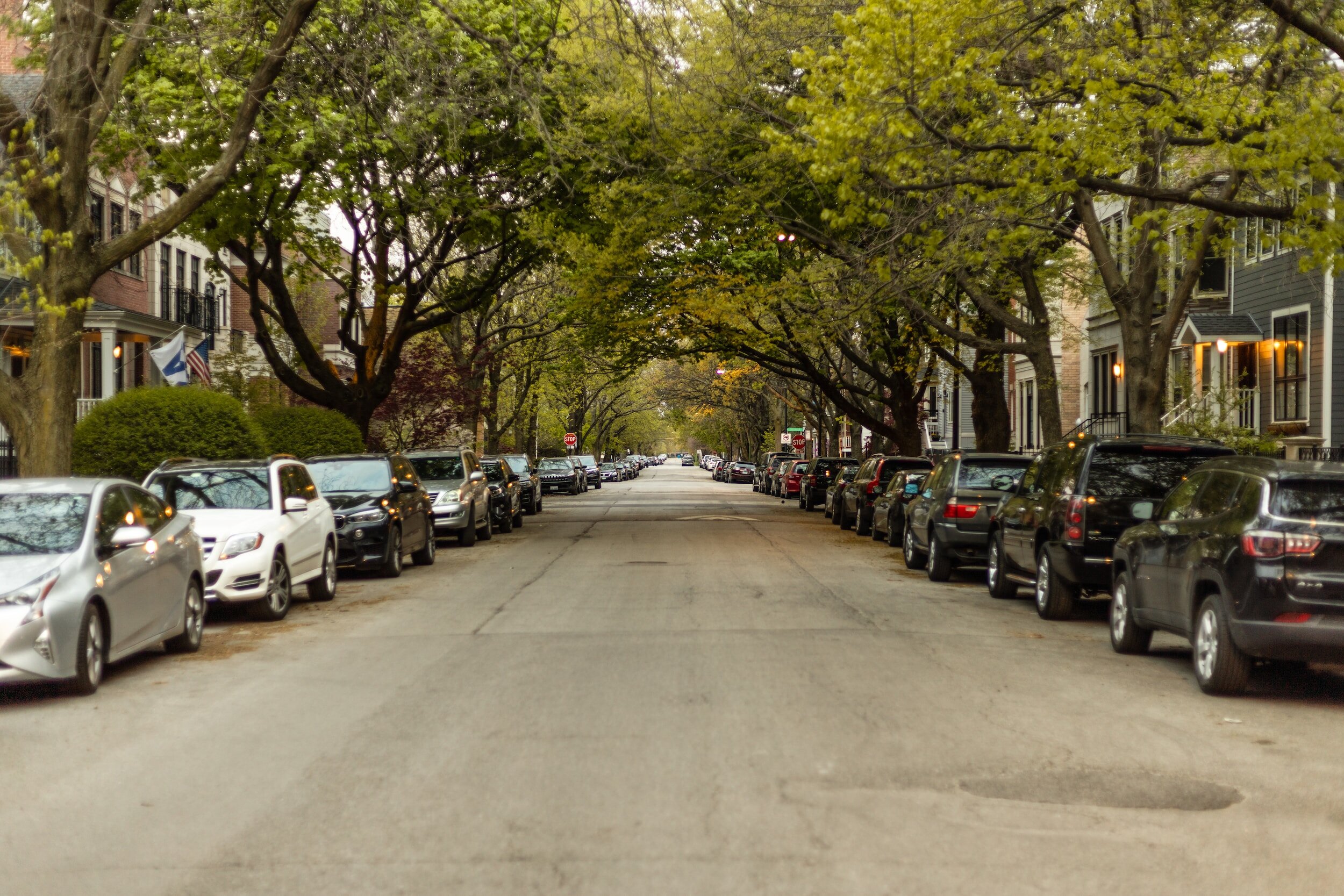
Are HOAs allowed to ban street parking in NC neighborhoods? Here’s what legal experts say

Homeowners’ associations (HOAs) in North Carolina are stirring debate over their power to enforce street parking bans, a common rule designed to address safety and aesthetic concerns. Recent discussions on social media platforms like Nextdoor highlight divided opinions, with some residents frustrated by restrictions that limit parking options for families or guests, while others advocate stricter enforcement to avoid street clutter and safety hazards.

Under the North Carolina Planned Community Act, HOAs established after 1999 have the authority to regulate parking, even on public streets, if outlined in their community’s restrictive covenants (CCRs). Legal experts note that these rules aim to maintain order, but they are often contentious among residents.

A proposed bill could change this dynamic by prohibiting HOAs from enforcing parking rules on public roads maintained by the state or local governments, regardless of what is stated in the CCRs. If passed, this legislation would limit HOA authority and potentially resolve ongoing conflicts.

Source: The Charlotte Observer

Myrtle Beach says they lose millions converting short-term rentals. Here’s how much

A recent report by Arnett Muldrow & Associates presented to Myrtle Beach officials warns of significant revenue losses if short-term rentals are converted to long-term use. The analysis, revealed on October 1, 2024, estimates that such conversions could cost Myrtle Beach $1.51–$2.52 million annually in lost taxes and fees, with combined losses for the city, Horry County, and South Carolina ranging from $4.58–$7.78 million. If 1,000 rental units were converted, the total impact could reach $7.61 million.

The report also highlighted increased costs for fire and police services in long-term rental areas and projected 48 job losses. Myrtle Beach had imposed a moratorium on conversions in April 2024 to assess financial impacts, covering properties near the beach. The freeze expires in January 2025, with no decision yet on an extension.

Key recommendations include creating an overlay district to manage conversions, updating zoning codes, and allowing long-term rentals in multi-family residential zones while excluding hotels and motels. However, the study’s scope was limited and excluded many property types, leaving unanswered questions about the broader economic effects and hotel room supply.

Critics argue the region’s evolving year-round economy might offset losses, but the city’s tax structure, reliant on tourism, suggests otherwise. The findings align with earlier projections of a $5.7 million economic impact loss.

Source: The Sun News

Legal Tips for HOAs and Condos Following a Natural Disaster

This article was originally published on October 3, 2024 by Jim Slaughter in HOA & Condo Associations Real Estate Blog for Law Firm Carolinas.

Law Firm Carolinas Blog

Whenever a natural disaster strikes–whether hurricane, flood, tornado–our office is inundated with calls from HOAs and condo associations on how to move forward. That’s a difficult question to answer globally, as no one size fits all. Community associations vary. Condominiums, townhomes, and single family homes are owned differently and have different responsibilities. Governing documents, such as declarations or bylaws, also have different wording on who is responsible for maintenance of certain items. As a result, while this article can’t provide legal advice for a specific association, here are tips to consider.

(1) Prevent further damage. Almost without exception, associations are responsible for maintaining and repairing the common elements. That means doing what is necessary to prevent further damage, whether putting a tarp on a damaged roof or removing water damaged belongings from a clubhouse. The association should consider similar action over items it may be responsible for under Declaration provisions, even if not owned by the association.

(2) Make an insurance claim on the appropriate policy. We are regularly asked by associations or owners whether to file a claim for damages with insurance. If there is significant damage, almost always the answer is “yes.” Both the association and owners should contact their respective insurance agents. What is there to lose? After all, it’s not the responsibility of the policyholder to figure out whether specific damages are covered or not. That’s the carrier’s responsibility.

In addition, there could be coverage even if it’s not known or readily apparent. For instance, many associations and homeowners damaged by the recent flooding will likely discover they have no flood insurance because they weren’t in a designated FEMA flood zone. Before deciding not to report a loss, however, recognize that certain damages might be covered by other provisions of the policy. Even association policies without flood coverage might have provisions covering water/sewer backup or business income and extra expense coverage, which might help depending on the specific circumstances. While there is no guarantee specific damage will be covered, you just won’t know unless you file a claim.

“Filing on the appropriate policy” refers to the policy that would cover a particular situation. For instance, all associations should have hazard (or “property”) insurance on common areas owned by the association. As a result, damage to the association’s property should be filed with the association’s insurance. Homeowners are often responsible for insurance on their own lots or units, but that can vary in condominiums and townhomes.

We are also often asked what to do if an owner demands that a claim be filed on an association policy that covers the homeowner, such as a condominium or some townhomes. If an owner is an insured under the association’s policy and demands that a claim be filed, it should generally be filed. (If damages are well below the deductible, sometimes claims are not filed, but recognize that unknown or additional damages could greatly increase the claim.) Insurance exists to help those damaged recover from awful situations, and it is far better to make a claim that may not be covered than to refuse an owner the right to possibly obtain insurance proceeds.

(3) Determine who is responsible for specific maintenance and repair within the association. The most common questions we receive after any disaster are who is responsible for specific repairs/maintenance work and, if it’s the association, can any amounts benefiting a specific owner be charged back to that owner. Again, the answer depends. Basic real estate law is that property owners must deal with what is on their property. For instance, if in North Carolina a lot owner’s tree falls across their yard and onto the association’s road, each is responsible for the part of the tree on their property. That is, the lot owner is responsible for the portion of the tree in their yard, and the association is responsible for the portion of the tree on its common property. A state statute as to community associations even provides that, except as the declaration may provide otherwise, “the association is responsible for causing the common elements to be maintained, repaired and replaced” and “each lot owner is responsible for the maintenance and repair of his lot and any improvements.” Where things get complicated is that declarations sometime contractually re-allocate either (a) the responsibility for doing the work or (b) the cost of the work. And if insurance is involved, such as when a tree hits a building or fence, the normal rules may go out the window. As a result, a review of the governing documents should be made as soon as possible to determine who is responsible for what within the association.

(4) Carefully review new contracts. Following any disaster, there will be innumerable contracts for every imaginable type of work: storm debris cleanup, tree removal, reconstruction of buildings, roof replacement, and many more. Service providers should of course be competent and experienced, and when possible, familiar with and worked with community associations. You may wish to review the Community Association’s Institute’s Directory of Credentialed Professionals and Professional Services Directory.

During the hectic circumstances following a natural disaster, it’s understandable that some of these agreements might be handshake-type oral contracts, rather than in writing. For very small contracts, that might be fine. However, there is an accurate saying that “an oral contract isn’t worth the paper it’s written on.”

Contracts of substance should be in writing and reviewed by an attorney. Certain provisions should be included or the agreement will be lacking in the event of a later dispute. At a minimum, any contract should be clear as to:

  • who the parties entering into the agreement are

  • the terms of the agreement

  • what is or is not a breach of the contract

  • what “consideration” or money is being exchanged

  • by when the contract must be completed

  • how to terminate the contract

  • that the vendor is insured, and

  • remedies in the event of a default by either side.

Depending on circumstances, a dispute resolution provision, such as arbitration or mediation, might be warranted. While contracts will vary depending on the circumstances and scope of work, the main theme here is that in the rush to get things done, don’t forgo making certain that all contracts are in the best interests of the association and legally binding.

(5) Evaluate existing contracts that can’t be fulfilled. In addition to concerns about new contracts, the association may have existing contracts that can’t be performed due to damage of property or even destruction of buildings. As to considerations in such instances, see this recent article: Collections, Force Majeure and Other Contractual Considerations Post-Hurricane Helene 

(6) Consider how to pay for things. As mentioned above, make an insurance claim. Another question we are regularly asked is whether community associations are eligible to receive FEMA aid. HOAs and condos are NOT generally eligible for FEMA assistance, but the Governor can request such a designation. Law Firm Carolinas’ partner Harmony Taylor is Chair of the NC Legislative Action Committee (NC-LAC). The Community Associations Institute (CAI) and the NC-LAC have already requested that NC Governor Cooper make such a designation. They are following this situation closely and have also been in touch with both of North Carolina’s U.S. Senators about additional aid. However, FEMA does not tend to do or reimburse for necessary work in associations. Debris removal, even when approved, must normally be done in coordination with local municipal authorities as part of local municipal debris removal efforts. Critical infrastructure repairs, such as private roads or lakes, tend to fall to the association, but assistance can sometimes be found from other places, whether insurance, a Small Business Administration disaster grant or loan, or the NC Department of Public Safety.

As to such issues, CAI has a Disaster Recovery Resources page with useful information and links as well as a page that updates advocacy efforts at Supporting Community Associations Affected by Hurricane Helene.

If not covered by insurance or any governmental entity, association expenses tend to fall to the association (and thus, its members). However, associations as nonprofits don’t tend to have extra money sitting around. If an association doesn’t have cash on hand to cover such expenses, other possibilities include a special assessment, if permitted, or a community association loan. For more thoughts on such options, see these past articles: Help, Our HOA (or Condo Association) Needs Money! and Association Loans: What You Need to Know.

(7) Don’t forget the “community” in community associations. Following a crisis, it’s easy to get focused on the responsibilities and legal duties of the association. Don’t forget that owners are hurting as well. Given a particular HOA or condo’s circumstances, a community association might provide information on available resources or news updates, provide shelter or aid, or encourage community spirit, whether through neighborhood storm-related clean-ups or social gatherings.

(8) Prepare for the next disaster. Some associations prepare a “pre-disaster loss plan,” which outlines the actions that will be taken in the event of certain circumstances. If such a plan already exists, it will address some of the issues above. If your association has not thought about plans in the event of a disaster, if should. If recent storms, wildfires, earthquakes and other weather-related events have taught us anything, it’s that natural disasters are a matter of “when,” not “if.”

The path following any natural disaster is long. We wish strength and fortitude to the associations, owners, and professionals working through this difficult situation.

Jim Slaughter is past President of the College of Community Association Lawyers and the North Carolina Chapter of the Community Associations Institute. For questions about any HOA/condo related matter, contact a community association attorney at Law Firm Carolinas’ North or South Carolina offices.
Jim Slaughter

Law Firm Carolinas, LLC

I’ve owned my North Carolina townhouse since 2023 — but now my HOA is charging me $13K for hailstorm damage that happened 2 years before I bought. What are my legal options?

When buying a home within an HOA, you're responsible for costs, including any special assessments imposed after you move in, even if the damage occurred before your purchase. Homeowners insurance may cover these costs if you have loss assessment coverage, but if not, you could be left paying out of pocket or negotiating a payment plan with the HOA.

Read More: MSN Moneywise

Editors Note: When owning a home in a planned community, even though the association is responsible for certain maintenance duties, other issues, such as storm damage, may fall on the homeowner. In these communities, homeowners typically carry their own insurance and are responsible for making repairs related to covered perils and/or items not designated as the association’s responsibility. Additionally, homeowners may be responsible for costs like special assessments imposed after they move in, even if the damage occurred before their purchase. It’s important to check your covenants and policies carefully, particularly to understand your maintenance responsibilities and to see if you have loss assessment coverage, which may help cover the costs, in some instances. While this may seem onerous, when compared to buying a single-family home, the same or similar risks and responsibilities generally exist in both situations.

Are HOAs allowed to ban street parking in NC neighborhoods? Here’s what legal experts say

In Charlotte, NC, homeowners have been in controversy over banning street parking. While some are okay with the enforcement of no street parking for safety reasons, others argue that it leaves no room for visitors or families with multiple drivers. What do you think? Should street parking be banned?

Read more

AMG Reminds Community Association Leaders of the US Fair Housing Laws

Depositphotos_231028698_l-2015.jpg

AMG reminds community association leaders that it is illegal under the US Fair Housing Laws to adopt or enforce rules or policies that discriminate against people based on:

  • Color

  • Disability

  • Familial Status (i.e. children)

  • National Origin

  • Race

  • Religion

  • Sex

Is adult swim time illegal?

Watch this video.

https://www.fox5dc.com/news/controversy-brewing-over-adults-only-swim-time-in-gaithersburg-community


For more information on the US Fair Housing Laws visit: https://www.hud.gov/program_offices/fair_housing_equal_opp/fair_housing_rights_and_obligations

Happy National Pet Day! Your Pets Living in Your HOA

Paul Pet Blog.png

April 11 is National Pet Day. While loving our pets is something we do every day, National Pet Day encourages us to pay special attention to pets. It is also a day to commemorate everything that our pets do for us on a daily basis. So if you have a pet, you can do something special for them on this day.

Here are 5 things you can do for your pets:

1. Take them for a long walk.

2. Buy them a special treat or new toy.

3. Spend a little bit of extra time with them. 

4. Give them a back scratch or tummy rub.

5. Take them to the groomer and give them a bath or haircut. 

After all, don’t they deserve it?

Let's look at your pets living in an HOA

It has been proven by studies that most homeowners select a home with their pets in mind. They are seeking homes that are suitable for pets and having nearby dog parks are a highly sought after community amenity. If the community does not have a designated dog park, a local nearby dog park is desired.

If you live in an HOA community, you have rules pertaining to pets. Many community associations institute rules governing the size of dogs, and some even ban certain breeds for safety and liability.  Each HOA has different pet regulations. Some have designated pet walking areas to keep waste in  a confined common area. If your community has dog walking areas, you may notice a waste receptacle and plastic litter bags. 

If you are a pet owner or plan to get a pet after you move into an HOA community, it is wise to read the rules in your HOA documents regarding pet restrictions. Pet related issues such as barking dogs, permitting pets in other resident's yards and owners not picking up after their pooches' are just some of the most common complaints with Homeowners Associations.

Reading your HOA documents regarding pet ownership may keep you out of an HOA related complaint issue and keep you from receiving notices, or worse, a fine for a violation. Associations often don't have to deal with the homeowner about pet pooping because angry homeowners feel free to confront culprit owners themselves instead of reporting it. In either case, it should be common courtesy for responsible pet owners to pick up after their own pets.

If you are buying into an HOA community, you can ask your Real Estate agent to do the preliminary work for you. He or she may already know which communities will be best suited for you and your pet. Most realtors are well versed in homeowners’ association laws, so they can quickly detect an issue for you. Ask your realtor to contact each HOA to verify breed restriction laws beforehand. It’s not worth falling in love with a home where your dog isn’t welcome. Once you’ve selected a home, ask your realtor for a copy of the HOA bylaws. Read through your documents carefully, and clearly understand pet restrictions. Many HOAs have  leash laws.

For more information on pet rules, implementation and management, contact AMG. Ask about our HOA board training.

The importance of reading your HOA Documents before you close on a home

The importance of reading your HOA Documents before you close on a home

So you just bought a new home or condo in a great neighborhood and you're super excited about it. You got your set of keys, garage door opener, mail box key, and huge stack of paperwork. You know that the stack or paperwork is probably important, but of course like most new owners, you are so excited about your purchase that the documentation gets thrown into a drawer somewhere during the moving process.

Read More