Association Management Group’s President, Paul Mengert, Urges Community Associations to Prioritize Directors and Officers Insurance Coverage

Community associations, including condominium and homeowner associations, should prioritize Directors and Officers (D&O) insurance coverage, according to Paul Mengert, President of Association Management Group (AMG). AMG is one of the leading community association management companies in the Carolinas. 

“Some mature associations have full insurance programs that do not include D&O insurance coverage,” said Mengert. “This omission is an unacceptable risk. Board members should not be exposed to personal liability for decisions made in a volunteer role.” Mengert also noted that D&O insurance policies are not created equal, and community associations should carefully review what is covered and what is not covered in certain policies. 

Mengert pointed out that one of the most common types of claims (lawsuits) filed against community associations is discrimination-related claims / suits. Therefore, he said, community associations should pay particular attention to discrimination coverages in D&O policies.

The Community Associations Institute (CAI) has highlighted the increasing number of lawsuits against community associations in recent years. Mengert echoed CAI's concerns, stating that without D&O insurance coverage, board members may face personal liabilities, leading to financial ruin. This absence of insurance coverage may also have a chilling effect on volunteerism in community associations, leading to decisions that are not in the best interest of the community. 

Mengert urged community association leaders to consult their licensed insurance advisors to make sure they have D&O and that the coverage meets their needs. 

Paul K. Mengert, CEO

Association Management Group, Inc. 

www.AMGworld.com

CEO of Association Management Group Carolinas Challenges Assertion on Fed Will Cover All Deposits

CEO of Association Management Group Carolinas Challenges Assertion on Fed Will Cover All Deposits

Greensboro, NC — In response to an economist making statements at a recent NC-CAI conference that the Federal Reserve has now effectively agreed to cover all deposits, Paul Mengert, the CEO of Association Management Group Carolinas, disagrees. Mengert states, “Claims that the Federal Reserve would be required to cover all deposits are possible but very questionable.” He reminds everyone of the $250,000 limit that remains in place. Mengert argues that even though the current political climate may support the Fed covering all deposits, unwritten policies can change suddenly, and political realities may vary based on different situations.

Market trends seem to support Mengert's opinion. Since the failure of Silicon Valley Bank, the gap between interest rates on bonds issued by money center banks and large regional banks has significantly widened. The gap was only about 15 basis points (bps) before the failure, but it has now increased to approximately 135 bps.

Investors are demanding higher interest rates from smaller banks. Mengert says, “This is due to concerns that the government may allow smaller banks to fail, resulting in a loss of investment.”

Mengert advises those responsible for investments in community associations to follow their governing documents and take all reasonable actions to protect deposits.

It is evident that Mengert's experience and knowledge, including his observations related to the banking industry, is a credible perspective on the matter. While those who assert all deposits will be covered may sound plausible to some, Mengert's skepticism is a reminder that we should be careful about accepting claims that seem too good to be true without doing proper research.

In the end, Mengert's advice to follow community governing documents and protect owner deposits is essential. Community associations should be vigilant in their investments and ensure that they are following best practices to safeguard the interests of their members.

Paul K. Mengert, CEO

Association Management Group, Inc. 

www.AMGworld.com

HOA and Condo Manager Association Management Group (AMG) Builds Hope for Greater Charlotte Area Pediatric Cancer Patient

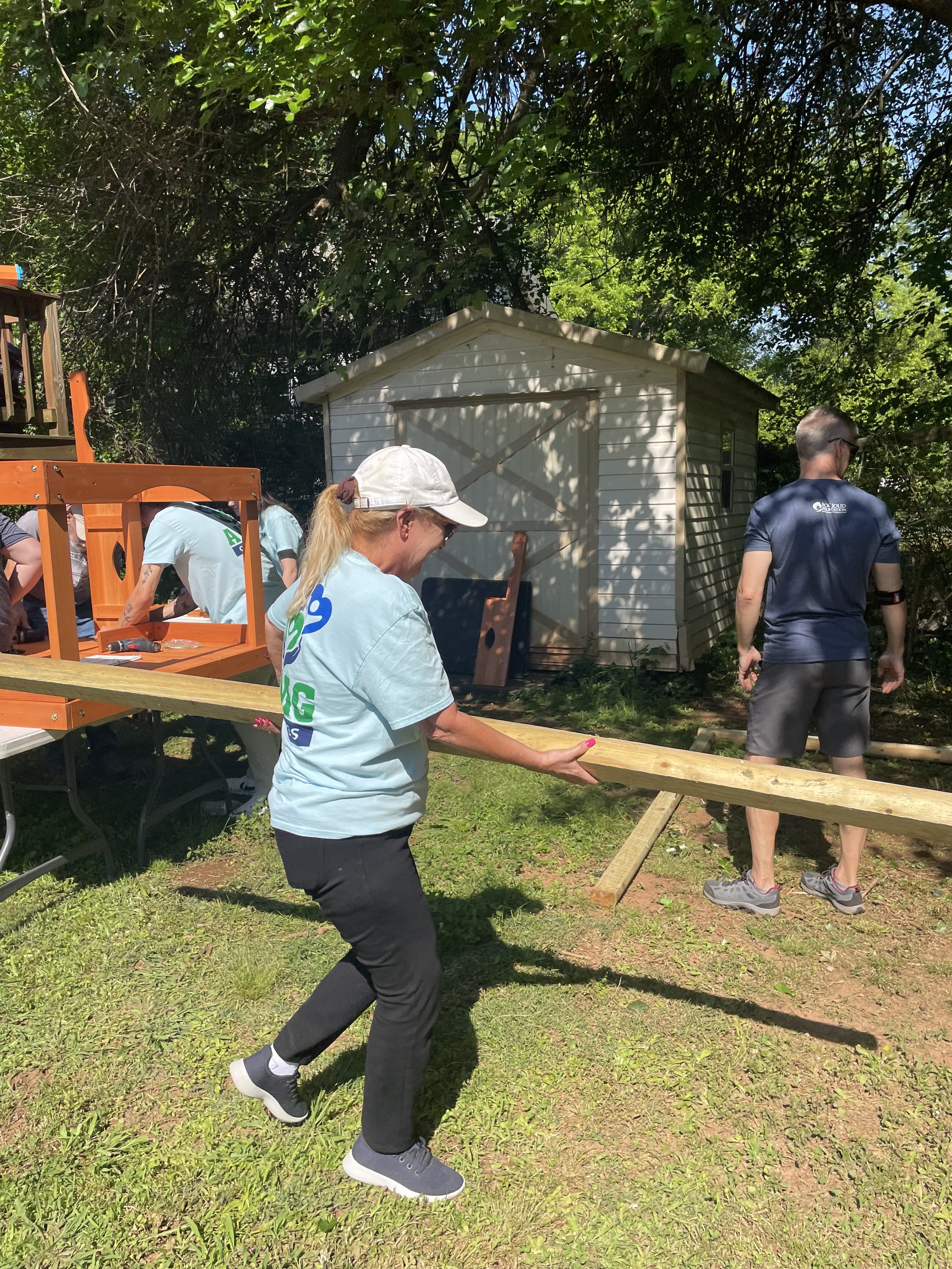
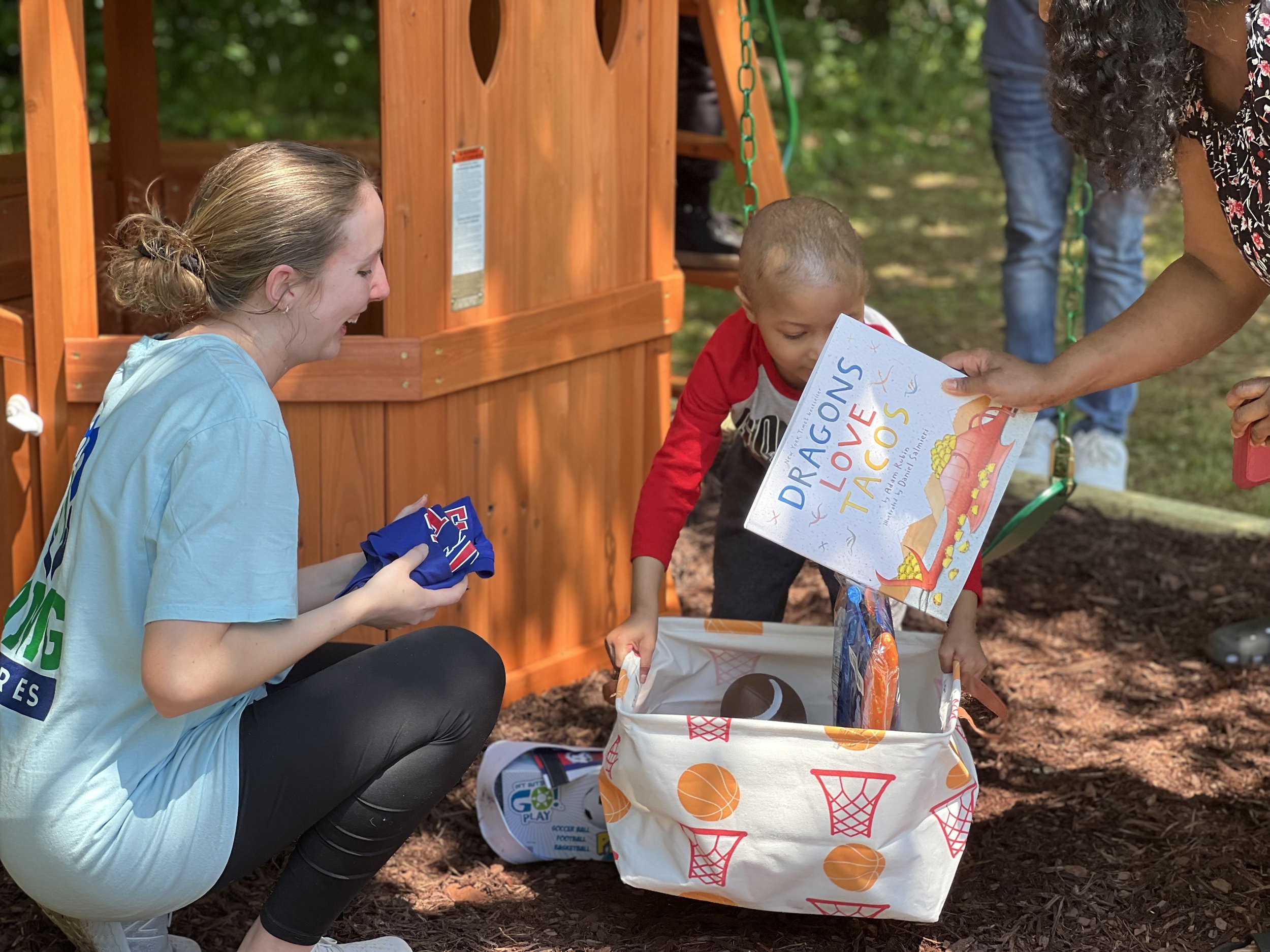
(ROCK HILL, SC) Volunteers from Association Management Group (AMG), one of the Carolinas’ largest professional homeowner association managers representing more than 30,000 property owners, constructed a custom backyard playset on May 6 for four-year-old Antonio Culp of Rock Hill, SC, a pediatric cancer patient in treatment for ependymoma, a tumor that starts in the brain or spine. Culp is the recipient of the free playset thanks to AMG and Roc Solid Foundation (RSF), a Virginia-based nonprofit that works with hospitals, organizations, and volunteers to Play It Forward and build hope for children and families fighting pediatric cancer. The team of 20 AMG staff worked from 9:00 a.m. till 1:00 p.m. on Saturday with tools, instruction, and guidance from an RSF project leader to create the playscape, which featured swings, a tree house, a slide, and a climbing area. “I just want to thank all of you for everything,” said Printiss Crosby, Antonio’s mother. “Antonio’s always wanted a swing set, so it’s just a blessing that you came out and did this for him. Even though he’s battling this (cancer), he’s just a happy boy.  I’m amazed.”  

It takes a team effort to restore hope to young cancer patients, according to Roc Solid Foundation founder and chief play officer Eric Newman. “We are so grateful for the support of groups like AMG who partner with us to bring play to kids fighting cancer. We truly believe that play defeats cancer, because cancer will be the last thing on this family’s mind when they see their playset. In that moment, play has won.”

It was a warm May day of lifting and laughter, hammers and hugs, screwdrivers and smiles. But the best part was the expression on Antonio’s face when he saw his new playscape, complete with signed best wishes from each member of the AMG construction team, said Paul Mengert, AMG founder and CEO. “In our industry of managing community homeowner and condominium associations, helping one’s neighbor–‘walking each other home’–is an important and uplifting responsibility. It’s satisfying and meaningful to help restore fun and play to the life of Antonio, a little boy going through cancer. We hope it brings him happiness, joy, and God’s blessing.” AMG President Dacy Cavicchia agreed. “Caring for our community is a key core value for us. We have a decades-old culture of giving back to the greater Charlotte area, both financially and as volunteers. According to Roc Solid foundation, sixteen thousand US children are diagnosed with cancer each year. Of course, therapy is important, but so is experiencing a happy, normal life. It was inspiring to spend the day creating a wonderful playspace this family can enjoy for years to come.”  

For details on Roc Solid Foundation or to learn how you can Play It Forward for pediatric cancer patients, visit rocsolidfoundation.org.

To learn about AMG, visit amgworld.com.

About AMG:  AMG is a professional community association management company dedicated to building effective community associations. AMG guides and assists executive boards to help protect the association's interests, enhance the lives of community members and improve the property values in the community. With offices throughout the Carolinas in Greensboro, Winston-Salem, Charlotte and Raleigh, NC, and Greenville and Aiken, SC, AMG is a knowledgeable partner in enforcing community governing documents with a proven set of processes and techniques, and supporting communities with a broad range of services which can be tailored to individual community needs. Association Management Group, Inc. is a locally Accredited Business by the BBB and is a nationally Accredited Association Management Company (AAMC) by the Community Associations Institute. For more about AMG, visit www.amgworld.com.
Stolen condo association funds recovered with minimum loss, but cyber criminals once more prove the need for diligence

When a Key Colony HOA thought they were making a payment to their master association after receiving emailed instructions from them, they were surprised to find that they had been scammed of over 100k. Read more to find out how they solved this issue.

Read More

AMG Has Volunteered to Construct a Custom Backyard Playset for a Four-year-old Pediatric Cancer Patient

AMG has volunteered to construct a custom backyard playset for four-year-old Antonio Culp, a pediatric cancer patient in treatment for ependymoma, a tumor that starts in the brain or spine. Antonio loves tacos, the Buffalo Bills NFL team, Just Wanna Rock, basketball, and his five older siblings. He is the recipient of this free playset thanks to Roc Solid Foundation, a Virginia-based nonprofit that works with organizations and volunteers like AMG to Play It Forward and build hope for children and families fighting pediatric cancer.

It’s hard transitioning from child to pediatric cancer patient. The comforting everyday routine of school, play, and family activities are replaced with medical appointments, treatments, fatigue, and worry. Roc Solid Foundation is dedicated to returning a little bit of normal life to kids facing cancer by providing custom backyard playscapes. But they can’t do it without good neighbors willing to volunteer in the building process.

AMG specializes in supporting safe and happy neighborhoods. In the business of managing communities, helping one’s neighbor is an important responsibility. With a decades-old culture of giving back to the greater Charlotte community–both with money and volunteer hours–AMG is hosting a team-building day of as many as 25 employees at the Culp home to assemble Antonio’s free playset, which will include a tree/playhouse, swing, slide, climbing structure, and more.

For details on Roc Solid Foundation, visit rocsolidfoundation.org.

To learn about AMG, visit amgworld.com.

Reducing Legal Risk

Listen Now

As a board member, what do you know about reducing legal risk?  When should a board or an individual member seek legal counsel?  As a board member, do you know what your scope of authority is?  When does appropriate, ‘doing my board member duty’ become inappropriate, unwise, ‘practicing law’?  These are all great questions that you can find out the answers to – tune in today!

Community Leaders Series - Reducing Legal Risk: When To Contact Legal Counsel
BG Podcast Network

To view our AMG Community Leaders Material from this episode visit hoacommunityleaders.com.

Evaluating Monthly Financials

Listen Now

Monthly financial reports – friend or foe?  Do the words balance sheet, income, profit and loss statement, change in fund balances, disbursements, and delinquencies make your head spin? Do you know what to look for on a financial statement? Do you know how often to review these statements?  If you answered yes to any of these questions, this podcast is for you! Listen to learn more.

Community Leaders - Guide To Evaluating Monthly Financials
BG Podcast Network

To view our AMG Community Leaders Material from this episode visit hoacommunityleaders.com.

5 Things to Look for In a Contract

Listen Now

Vendor contracts - are you prepared or not? What should a community look for when first contracting with a new vendor?  What should a community look for when renewing a vendor contract?  Is there common language used in contracts?  Who is the best person to seek advice from when starting a new endeavor in your community?  Listen to find out the answers to these questions and more.

Community Leaders Series - Five Things To Look For In A Contract
BG Podcast Network

To view our AMG Community Leaders Material from this episode visit hoacommunityleaders.com.

Solar Panels

Listen Now

Solar panels – to be or not to be?  As a resident wanting to install solar panels, do you know the guidelines and procedures of your community? As a board member, do you know and understand the guidelines of your association, and even your state?  Understanding the rules and processes of solar panels can be a daunting endeavor.  Listen today to find out how to navigate this area and help protect all parties that are involved.

Community Leaders Series - Solar Panels
BG Podcast Network

To view our AMG Community Leaders Material from this episode visit hoacommunityleaders.com.

5 Ideas to Increase Property Value Under 10k

Listen Now

What are some ways to increase homeowner satisfaction without breaking the HOA budget?  What small and subtle changes can have a high impact in a community? What are some changes that won’t break the bank?  How can a community best showcase its beauty to prospective home buyers? If you are interested in learning more about this topic or want answers to these questions, this podcast is for you.

Community Leaders - 5 Ideas To Increase Property Value
BG Podcast Network

To view our AMG Community Leaders Material from this episode visit hoacommunityleaders.com.

Fair Housing

Listen Now

How much do you and your Board know about Fair Housing Act issues involving discrimination, harassment, or retaliation? How do you approach these issues?  And more importantly, how do you overcome these issues?  What steps can be taken to protect the HOA Board members and community members alike?  Listen to find out the answers to these questions and more.

Community Leaders Series - Fair Housing
BG Podcast Network

To view our AMG Community Leaders Material from this episode visit hoacommunityleaders.com.

Collections

Listen Now

Collections – a very important topic for Homeowners’ Associations.  Collections - a topic that can be tricky when dealing with neighbors and friends.  What is the correct process?  How do you avoid uncomfortable situations and possible lawsuits?  Listen today to find out more about the correct way to handle collections in your Homeowners Association.

Community Leaders Series - Collections
BG Podcast Network

To view our AMG Community Leaders Material from this episode visit hoacommunityleaders.com.

Dealing with Difficult Homeowners

Listen Now

Calling all homeowners, board members, and community managers!  Have you ever had to deal with an angry homeowner?  Have you ever had to diffuse a situation or ‘talk someone down’?  What are the important things to remember in these situations?  Listen today to find out the best way to handle a frustrated or angry person.

Community Leaders Series - Dealing With Difficult Homeowners
BG Podcast Network

To view our AMG Community Leaders Material from this episode visit hoacommunityleaders.com.

Cyber Security

Listen Now

Do community associations need cyber security or cyber security insurance?  What types of insurance are available and what types are needed?  Do you know who is held accountable if there is a cyber information breach?  What steps need to be taken and who needs to be called if there is such a breach?  Listen to find out the answer to these questions and more on cyber security.

Community Leaders- Cyber Security
BG Podcast Network

To view our AMG Community Leaders Material from this episode visit hoacommunityleaders.com.

Two Pending NC Bills Would Significantly Change Association Governance and Practice

Two pending NC bills regarding HOA’s are concerning associations. These two bills enforce rules on collection action for late payments, and landlord-tenant issues. Read more and let us know what you think about these pending bills.

Read More

Tips on How to Manage a Successful Condo HOA Board.

Introduction

Managing a condo HOA (Homeowners Association) board can be a challenging task, especially when dealing with diverse residents and their interests. However, with effective leadership and management skills, the process can be smooth, productive, and beneficial for everyone involved. In this blog post, we will share some tips on how to manage a successful condo HOA board.

1. Communication and Transparency

Communication is the backbone of any successful condo HOA board. It is essential to use effective communication strategies to ensure everyone is aware of updates, decisions, and expectations. A transparent approach creates a conducive environment for residents to voice their concerns, ideas, and opinions. Set regular meetings or use online platforms to reach out to residents and board members regularly.

2. Set Realistic Goals and Expectations

It is essential to have a clear understanding of the goals and expectations of the condo HOA board. Set measurable and achievable goals that align with the board's mission and objectives. Ensure that everyone understands their roles and responsibilities, and all expectations are realistic and achievable. Decide on the minimum standards expected from residents, tenants, and visitors in the community, and enforce them clearly and consistently.

3. Foster a Sense of Community

Building a strong sense of community is vital to maintaining a successful condo HOA board. Ensure that new residents are welcomed and made to feel part of the community. Organize events, programs, and activities that promote social interactions, networking, and teamwork. Encourage residents to participate and volunteer in the community's activities and engage in collective responsibility.

4. Financial Management

As an HOA community manager, you must manage the finances effectively. Ensure that all expenses are accounted for, and there are enough funds to cover essential expenses such as insurance, maintenance, and upgrades. Create a realistic budget and maintain a reserve fund for emergencies. Ensure that all residents are aware of the financial situation and that they have access to financial statements.

5. Stay Informed

As an HOA community manager, you need to be up-to-date on the latest legal requirements and regulations in your area. Stay informed about state and local laws, taxes, and other important regulations that impact the community. Attend training and development programs to stay informed about best practices and emerging trends in HOA management.

Conclusion

Managing a successful condo HOA board requires effective communication, goal-setting, community building, financial management, and staying informed. By applying these tips, you can create a conducive environment for everyone in the community and maintain a successful and thriving condo HOA board. Remember to stay engaged and approachable, always looking for ways to improve the community's welfare.


NC Bill to Restrict HOA/Condo Collections Would Harm Associations & Owners

NC Bill to Restrict HOA/Condo Collections Would Harm Associations & Owners

Posted on April 26, 2023 by Jim Slaughter

https://blog.lawfirmcarolinas.com/bill-to-restrict-hoa-condo-collections-would-harm-associations-homeowners/

As described in my recent NC Community Association Legislative Update, one bill moving through the NC General Assembly is HB 542 “Protect Homeowners’ Rights.” In addition to placing further requirements on associations as to the collection of past due assessments, the proposal would prohibit the filing of a lien against an owner who fails to pay obligatory association assessments unless the amount is $2,500 “or one year of unit owners’ association assessments, whichever is lesser.”

The bill’s attempts to add protections to owners not paying obligatory dues may be well intentioned, but such a dollar cap before a lien can be filed will almost certainly harm all other owners in the association. The association’s expenses do not stop, even if assessments can’t be obtained from certain owners.

NOTE: This is not a bill to prevent foreclosure unless the owner owes $2,500 or one year of assessments–it prevents all even the filing of a lien on the non-paying owner’s property.

While a $2,500 or one-year minimum threshold before assessments can be collected might seem reasonable and charitable to owners, it would almost certainly harm associations and other owners due to the following:

  1. Given varying costs of living, assessments tend to be lower in North Carolina than in bigger, more expensive states or northern cities. We have associations with few amenities and limited common area or possibly just insurance on common elements or an entrance sign to maintain. It would take YEARS for owners to accrue $2,500 in assessments. North Carolina is not a super lien state (many states have a provision that if a mortgage is foreclosed, the bank must pay the association so many months of assessments). As a result, in North Carolina the lot could be sold or the property foreclosed upon long before the association could go after the funds.

  2. To not even be able to file a lien will mean that owner’s assessments will likely be lost. The property will get sold free and clear or a mortgage will foreclose and all assessments will be lost (as happens in states without a super lien statute). The sometimes-suggested alternative of bringing an actual lawsuit in the courts costing many thousands of dollars and at least a year in litigation to recover $1,000 in assessments is impractical.

  3. From a fairness standpoint, putting in such a cap basically means that more affluent associations can go after owners, but less affluent associations will have a deficit. As an example, a downtown condominium that charges $2,500 monthly assessments would reach the limit immediately. On the other hand, we have associations where it would take five years to reach the threshold and would have to get more money from existing owners. The legislators introducing the bill may think it is pro-homeowner, but it is only pro-nonpaying homeowner, as it will certainly be negative for the 95% of owners who are paying timely and must pay more.

  4. Dues are not less significant to smaller, less affluent associations. An association is a zero-sum game. There is no means of making up lost funds other than paying owners paying more, which may not be practical. Since the assessments may pay for items such as electricity or insurance on the common elements, those services will get cancelled.

  5. Both the obligation for the assessments and the right to lien and foreclose are part of the contract that every owner agreed to when buying into the community.

  6. At the end of the day, a lien for nonpayment of property assessments is much like other real estate liens, including materialman’s or mechanic’s liens. We don’t have state laws that prohibit a plumber or contractor from going after an owner for non-payment of work on the property unless it reaches a certain dollar amount. Associations should not be treated differently.

  7. If you put a cap, such as $2,500, below which you cannot effectively pursue collections, won’t owners go into arrears just less than that? There would be nothing to do as to the owners who keep their balance at $2,499, but that expected money which is part of the budget will be lost to the association.

  8. I’m don’t practice constitutional law, but the proposal as worded when applied to existing associations (versus future ones) seems to run afoul of the Contracts Clause  of the US Constitution (“No state shall pass any Law impairing the obligation of contracts.”). Here, the State would be interfering with the existing contract of the declaration. Rather than protecting private contract rights, this proposal would void them.

HB 542 may be well intended but would have very negative unintended consequences. An overwhelming number of NC community associations have low assessments. To those owners, though, it is significant money, and they should not be forced to pick up the deficit from other owners who fail or refuse to abide by their contractual obligations.

The bill and its current status can be found at https://www.ncleg.gov/BillLookUp/2023/H542.

Proposed NC Law Changing Declaration Amendments Would Harm Associations and Owners

As described in my recent NC Community Association Legislative Update, an HOA/condo bill moving through the NC General Assembly is Senate Bill 553/House Bill 551 “Landlord/Tenant and HOA Changes.”

SB 552 and HB 551 are mainly focused on landlord-tenant issues, but both include a provision that any declaration amendments made by an HOA or condo association would “only affect lot owners whose lots are conveyed or transferred after the amendment takes effect.” Such an outcome impacting ALL declaration amendments would have disastrous consequences on many associations.

As a reminder, amendments to declarations can only be adopted if overwhelming supported by the members. State law provides that a declaration can only be amended by the “affirmative vote or written agreement signed by lot [or “unit”] owners of lots to which at least sixty-seven percent (67%) of the votes in the association are allocated, or any larger majority the declaration specifies.”

Like all legislation, the bill may yet be amended to limit its scope. However, the bill with its present wording making all declaration amendments prospective would have significant negative repercussions:

  • Associations would no longer have common schemes of development, which is a major reason buyers purchase in homeowner and condominium associations. “That lot can have automotive repairs in the yard, but that lot can’t” is a bad outcome. Whether a particular lot is subject to a specific declaration amendment would depend on when the lot was purchased in relation to when the amendment was adopted. For an association to figure that out would require significant research and tracking. Adopted rental restrictions would only apply to owners purchasing after the declaration amendment was adopted, even if a specific owner voted IN FAVOR of the amendment to restrict short term rentals.

  • Declaration amendments cover far more than just rental amendments. Associations trying to fix insurance or maintenance issues in an older declaration could not easily do so. We have assisted many older condos or townhomes where the association’s insurance has simply become unaffordable. Members addressed the issue by amending their declaration as to reallocate what the association insures and what the owners insure. How could that possibly work if some owners are impacted by the change to insurance and others not?

  • Condominiums are not able to obtain FHA/Fannie Mae/Freddie Mac financing unless they have certain rental restrictions in place. As a result, we are often asked by older condominiums to amend the declaration to align with federal regulations. Saying that current owners are not impacted by a declaration amendment would mean the condominium is out of compliance with federal regulations. This bill as applied to condominiums will make financing for purchases of condos difficult to impossible for some condominiums.

  • Some association declarations provide a flat assessment amount to be paid by owners. The bill would mean that changes to dues would only apply to future owners. Different owners being obligated to different assessments depending on when they purchased their property is completely impractical from an association finance perspective.

SB 552 and HB 551 need more consideration and editing before moving forward. Otherwise, they will significantly and negatively impact North Carolina’s almost 15,000 associations and the 2.8 million owners living in them.

The bill and its current status can be found at https://www.ncleg.gov/BillLookUp/2023/H551.

A Review of the Nextdoor App

As a homeowners association manager, I have seen the impact that social media platforms like Nextdoor can have on our communities. While there are certainly benefits to using the app, it is important to recognize the potential negatives and concerns that come with it.

On the positive side, many residents credit Nextdoor with helping them feel safer and more connected in their communities. It is a great resource for sharing business recommendations, posting neighborhood photos, and retrieving lost pets. However, when it comes to sensitive issues like crime or suspicious activity, it is important to evaluate the credibility of the poster before giving it much value.

The hyperlocal focus of Nextdoor can make it easy for individuals to report on activity in their neighborhood, but it is important to remember that not all reports may be credible. It is important to use common sense and critical thinking skills when evaluating these reports. If something seems off or exaggerated, it is important to take a step back and consider the source.

Nextdoor has implemented limits on political posts, including restrictions on reposting campaign news and sharing non-local news about national or international politics. If you notice these restrictions being violated, it is important to report them.

Another concern with Nextdoor is the potential for posts to become overwhelming and spammy. While it is great to stay informed about local events and issues, it can be frustrating to constantly receive notifications about irrelevant or repetitive posts.

To combat this issue, Nextdoor has implemented features like post filtering and muting notifications from certain users. It is important for users to take advantage of these features and customize their notification settings to fit their needs.

Additionally, it is important to remember that Nextdoor is a public platform and to be mindful of what is posted. Overposting, spamming, or posting irrelevant content can be detrimental to the overall community experience. By being respectful and considerate in our posting habits, we can ensure that Nextdoor remains a valuable resource for our communities.

In conclusion, Nextdoor can be a great tool for connecting with your neighbors and staying informed about local events and issues. However, it is important to be aware of the potential negatives and concerns that come with using the platform. By being mindful and using critical thinking skills when evaluating posts, we can ensure that Nextdoor remains a positive resource for our communities.

Paul K. Mengert, CEO

Association Management Group, Inc. 

www.AMGworld.com

*It should be noted that the above is expressed solely as a personal opinion. Individuals are encouraged to draw their own conclusions based on all available information and not rely on any single opinion.