
Lessons from the Neighborhood: Why This Series Matters More Than Ever
/
If you’ve spent any time around a community association boardroom, you already know this:
Leading a community isn’t simple.
It looks simple from the outside. A few meetings. A budget. Some rules. Maybe a landscaping contract and an annual meeting.
Then reality shows up.
A roof fails earlier than expected. An owner challenges a rule. Costs go up faster than anyone planned. A decision that seemed small at the time starts to echo through the community months later.
And suddenly, what felt like volunteer service starts to feel like real governance. Because it is.
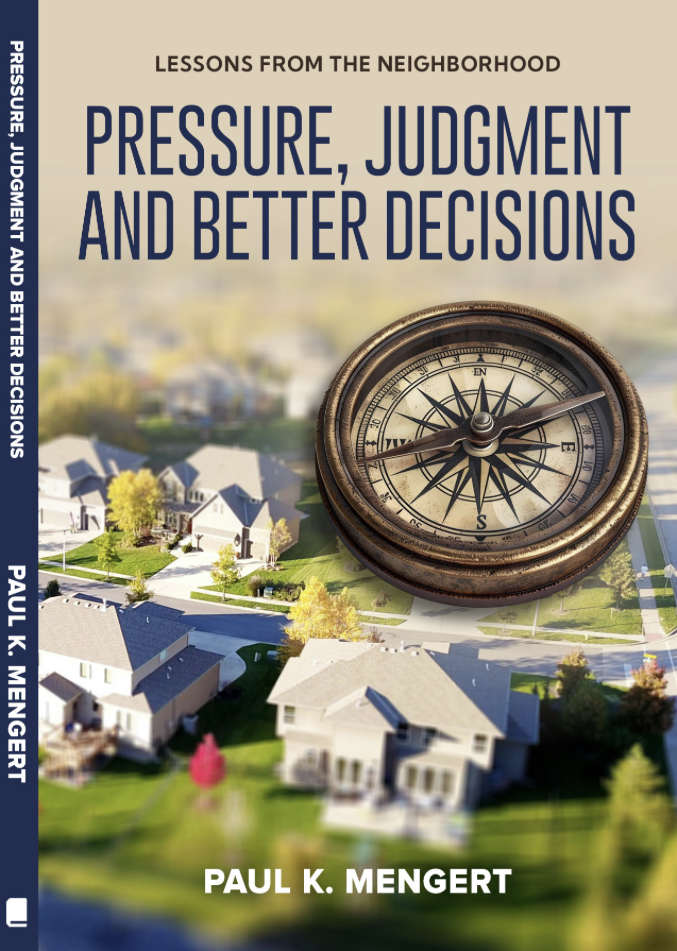
That’s exactly why Lessons from the Neighborhood was written.
Where This Series Came From
In many cases, community associations don’t struggle because people don’t care.
They struggle because people care… without having a clear framework for the decisions in front of them.
Over decades working with boards, managers, and communities across different markets, one pattern shows up again and again:
Problems rarely start with bad intent.
They start with hesitation.
A board delays a reserve increase to avoid pushback.
A maintenance issue gets “monitored” instead of addressed.
A rule is enforced inconsistently because no one wants conflict.
A budget is built around comfort instead of reality.
None of those decisions feel dramatic in the moment.
Over time, they compound.
That’s the gap this series is designed to fill. Not theory. Not legal language for the sake of it. Practical guidance rooted in how decisions actually get made in communities where people see each other at the mailbox.
What Makes Lessons from the Neighborhood Different
There are plenty of resources that explain what the rules are.
Fewer explain how those rules play out in real life.
Here’s the distinction. On paper, governance looks clean. Structured. Predictable.
In practice, it’s not.
It’s shaped by human behavior. By competing priorities. By financial pressure. By the natural tendency to avoid difficult conversations.
In my experience, governance failure doesn’t usually begin with misunderstanding the law.
It begins with avoiding reality.
This series is built around that truth.
Each pocketbook focuses on a core area of responsibility, but always through the same lens: how real boards make decisions under real pressure.
A Practical Roadmap for Community Leadership
The series is organized into five focused pocketbooks, each addressing a different dimension of community governance.
1. Governance and Legal Foundations
This is where everything begins.
Associations are not informal groups. They are corporate entities with defined authority, responsibilities, and limitations.
Understanding governing documents, fiduciary duties, and decision-making structure isn’t optional. It’s foundational.
Because here’s the rub:
Authority in a community does not come from personality.
It comes from documents and law.
Boards that understand that tend to make more consistent, defensible decisions. Those that don’t often find themselves navigating confusion and conflict.
2. Financial Stewardship and Long-Term Stability
This is where many communities quietly drift off course.
Financial issues in associations rarely begin with a crisis.
They begin with optimism.
A delayed increase.
An assumption that costs will stabilize.
A reserve study treated as a suggestion instead of a warning.
Over time, those decisions catch up.
Financial stewardship in a shared community is not just about balancing this year’s budget. It’s about aligning today’s decisions with obligations that may not fully show up for 10 or 20 years.
Handled well, it builds trust.
Handled poorly, it creates surprises. And surprises in community associations are rarely small.
3. Physical Asset Management and Infrastructure Planning
Buildings do not respond to optimism.
They respond to maintenance. Or the lack of it.
Roofs age. Roads deteriorate. Systems fail. Not maybe. Will. 
In many cases, the biggest risks facing a community are not the visible problems.
They are the quiet ones.
The deferred repair.
The delayed replacement.
The report that sits on the table a little too long.
I’ve seen this play out poorly more than once.
The issue usually isn’t that the board didn’t know. It’s that the timing felt inconvenient.
Until timing was no longer a choice.
4. Community Leadership, Communication, and Culture
This is the part no one talks about enough.
Documents define authority. Leadership defines outcomes.
Two boards can face the same issue and create completely different results based on how they communicate, how they manage conflict, and how they set expectations.
In many cases, community tension isn’t caused by the decision itself.
It’s caused by how the decision is handled. Or avoided.
Or explained too late.
Healthy communities are not conflict-free.
They are well-led.
5. Tactical Smarts: Reducing Stress and Improving Decisions
This final piece brings everything together.
Because governance doesn’t happen in ideal conditions.
It happens with incomplete information. Competing priorities. Time pressure. And the reality that the people affected by your decisions are your neighbors.
This pocketbook focuses on judgment.
Not perfect decisions. Better decisions.
Earlier decisions.
Clearer thinking under pressure.
Because in community associations, the difference between manageable and expensive is often one thing:
Timing.
Why This Matters Right Now
Community associations are not getting simpler.
Costs are rising.
Regulatory environments continue to evolve.
Owners are more informed and, in many cases, more vocal.
Infrastructure across the country is aging at the same time boards are trying to keep assessments reasonable.
That combination creates pressure.
And pressure exposes gaps.
Some communities have found that when leadership is grounded in structure, discipline, and communication, those pressures can be managed.
Others discover those gaps the hard way. Through special assessments, deferred maintenance, or loss of trust.
This series exists to help boards land on the first path more often than the second.
A Quick Reality Check
Let me offer one simple observation.
Most board members do not sign up thinking they are about to oversee:
A multi-million dollar budget
Long-term capital planning
Contract negotiations
Risk management decisions
And a form of neighborhood-level governance
But that’s exactly what the role becomes.
One director said it best:
“I thought I joined a committee. I didn’t realize I was helping run a small corporation.”
That shift in understanding changes everything.
Who This Series Is For
This series was written for:
Volunteer board members trying to do the right thing
Community managers balancing multiple demands
Developers transitioning control to homeowners
Industry professionals supporting association governance
But more than anything, it was written for people making decisions that affect where others live.
That responsibility deserves clarity.
Final Thought
Governance done well rarely gets attention.
Governance done poorly almost always does.
Lessons from the Neighborhood is not about perfection. It’s about improving how decisions are made before small issues turn into expensive problems or strained communities.
Because in the end, this isn’t just about budgets, buildings, or bylaws.
It’s about people. Living next to each other. Sharing responsibility for something that matters.
Want a deeper look at the inspiration behind the series and what’s coming next?
www.lessonsfromtheneighborhood.com
And in the spirit of World Book Day, I’ll ask you the same question we’re asking our community:
What are you reading or listening to right now?

About the author:
Paul K. Mengert is a nationally recognized educator in community association management and the Founder and CEO of Association Management Group, Inc., with more than 30 years of experience advising boards and leadership teams across the United States and internationally.
A thought leader within the Community Associations Institute (CAI), he was named CAI Educator of the Year, holds the prestigious PCAM® designation, and teaches governance and decision-making at Wake Forest Law School and in a Harvard Business School alumni program.
He has been named a Most Admired CEO by the Triad Business Journal, served as a housing advisor to the United States Department of State, and chaired the Piedmont Triad International Airport Authority.
His work focuses on helping community leaders make better decisions under pressure, where governance, finance, and human dynamics intersect, and where the consequences are real.