
Why HOA Boards Slowly Lose Governance Discipline
/
Most HOA governance failures do not begin with fraud, lawsuits, or dramatic public conflict.
They begin with drift.
A meeting runs 30 minutes longer than planned because no one wants to end a repetitive discussion. A director consistently arrives unprepared, yet the board chooses to compensate rather than confront the issue. One personality gradually begins steering every conversation while others retreat into silence to avoid friction. Another director becomes so consumed with technical minutiae that larger financial or operational concerns receive only passing attention.
None of these moments feels catastrophic when viewed individually.
Over time, however, they accumulate.
Eventually, the board stops governing proactively and starts reacting emotionally.
In HOA and condominium associations, that shift matters enormously. Unlike corporate boards, community association management operates in highly visible environments where the consequences of dysfunction appear quickly. Deferred maintenance shows up in deteriorating sidewalks, leaking roofs, unstable reserves, frustrated homeowners, and increasingly hostile meetings.
People feel governance failures long before they understand them.
What Is HOA Governance Drift?
Governance drift occurs when an HOA board gradually loses disciplined decision-making through avoidance, inconsistent procedures, weak participation, or unclear operational boundaries.
Associations rarely become unstable because of one disastrous decision. More often, they weaken through smaller leadership habits that slowly replace discipline with avoidance.
In our experience, emotional avoidance in HOA governance almost always becomes a financial issue.
That pattern appears repeatedly in HOA management and condominium association management communities throughout the country, including many associations across North Carolina and South Carolina.
The Boardroom Problem Few Associations Discuss Openly
Most HOA boards are comfortable discussing budgets, landscaping contracts, insurance renewals, architectural requests, reserve studies, or covenant enforcement.
They are far less comfortable discussing board behavior itself.
That hesitation is understandable. HOA directors are volunteers. They are neighbors. In many communities, they accepted board positions simply because no one else volunteered.
Addressing unhealthy meeting habits can feel personal very quickly.
So boards tolerate behaviors they would never accept from vendors, managers, or homeowners.
Meetings wander.
Conversations repeat.
Operational boundaries blur.
Decisions stall.
We have seen associations spend more time debating the wording of a homeowner violation letter than discussing reserve deterioration that may eventually require a significant special assessment.
That imbalance is rarely about intelligence.
It is usually about emotional comfort.
Detailed arguments often feel safer than difficult strategic decisions.
Three HOA Board Behaviors That Quietly Create Long-Term Problems
1. The Silent Partner
Every HOA board eventually encounters the director who attends regularly but contributes very little.
They rarely challenge assumptions. Rarely ask difficult questions. Rarely engage unless directly prompted.
At first glance, this may appear respectful or cautious.
In practice, it weakens the board’s collective judgment.
Reserve studies, vendor management, HOA financial planning, insurance renewals, delinquent assessment collection, and capital repair decisions all require active participation from directors willing to openly evaluate competing risks.
Lessons from the Neighborhood: Greensboro Commons
At Greensboro Commons, Director Emily quietly worried for months that reserve funding was falling behind projected roofing obligations. She carefully reviewed the financials before each meeting but rarely raised concerns because stronger personalities dominated the discussions.
Two years later, the community faced a rushed special assessment after multiple roof failures accelerated unexpectedly.
Her silence was not malicious.
It was uncomfortable.
But the financial consequences were still real.
Prolonged silence inside an HOA boardroom usually signals intimidation, disengagement, or a culture where balanced participation no longer feels welcome.
None of those conditions supports healthy HOA governance.
2. The Super Volunteer
Some directors struggle to distinguish between governance and operations.
Instead of setting policy and evaluating outcomes, they begin inserting themselves directly into contractor supervision, maintenance oversight, vendor communication, or management instructions.
At first, this often looks like dedication.
Eventually, it creates confusion.
Vendors stop knowing who speaks for the association. Managers become hesitant to act independently. Fellow directors gradually disengage because one personality dominates implementation details.
Lessons from the Neighborhood: Charlotte Manor
At Charlotte Manor, Director Mike routinely texted landscaping vendors between meetings to “clarify expectations.” He attended weekend repair projects personally and frequently issued informal maintenance instructions without board approval.
Within months, vendors received conflicting directives, project timelines slipped, and billing disputes escalated into expensive legal disagreements.
Mike genuinely believed he was helping.
That is what makes this governance pattern so common.
Strong community association management depends on authority flowing through the process rather than personality.
3. The Deep Diver
This behavior is common in HOA governance and property management.
Boards become so absorbed in operational details that strategic thinking gradually disappears.
The discussion may involve paint specifications, asphalt thickness, irrigation systems, or architectural wording. Those details matter. But they are not always the board’s highest value contribution.
Strong governance requires perspective.
Boards are responsible for preserving long-term financial stability, not simply winning operational debates.
Lessons from the Neighborhood: Winston Place
At Winston Place, the board spent nearly forty-five minutes debating the exact color and placement of new clubhouse benches while a reserve study warning about underfunded roofing obligations sat untouched on the agenda.
By the end of the meeting, the benches were approved.
The reserve discussion was postponed again.
Buildings do not respond to optimism.
They respond to maintenance, timing, reserve planning, and disciplined financial decision-making.
The “Deep Diver” habit is often avoidance disguised as diligence.
Why Boards Hesitate to Correct Dysfunction
Neighbor politics changes everything.
Corporate boards often confront dysfunction more directly because relationships remain primarily professional. HOA boards operate inside social environments layered with friendships, prior conflicts, elections, and community visibility.
People worry about embarrassment.
Retaliation.
Social tension around the clubhouse or pool.
So instead of addressing unhealthy behavior directly, many associations quietly adapt around it.
That adaptation becomes expensive over time.
Meetings grow longer. Volunteer burnout increases. Decision-making slows. Capable future volunteers decide not to participate after watching dysfunction firsthand.
The board slowly loses institutional resilience.
Healthy HOA Boards Build Structure Before Conflict Appears
The strongest community associations rarely rely on chemistry alone.
They rely on process.
Clear agendas.
Defined authority.
Preparation expectations.
Committee boundaries.
Decision timelines.
Executive session discipline.
Written policies.
None of these governance tools eliminates disagreement. Nor should they. Productive disagreement often improves board decision-making.
But structure prevents disagreement from consuming the system itself.
On paper, strong HOA governance sounds straightforward.
In practice, it rarely is.
Particularly in volunteer environments, where communication styles, personalities, and emotional investment vary dramatically from one director to another.
This is one reason experienced HOA management companies often provide value beyond administration alone. Strong operational systems create consistency even when board personalities fluctuate over time.
Boards looking for practical governance guidance often turn to Association Management Group and the Lessons from the Neighborhood series for real world insight into HOA governance, reserve planning, vendor oversight, and long term community stability.
Paul’s Key Guidance
Pay attention to meeting behavior long before those habits create visible operational problems.
If the same discussions repeat month after month without resolution, governance discipline is already weakening.
Healthy HOA boards do not avoid uncomfortable conversations. They create systems that make those conversations manageable through structure, preparation, accountability, and disciplined communication.
The strongest boards are rarely the ones with the fewest disagreements.
They are the ones where process remains stronger than personality.
About the Author
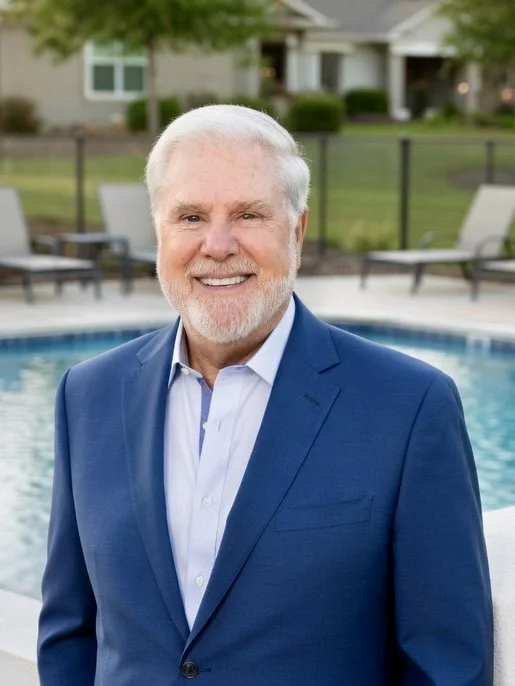
Paul Mengert is a nationally recognized educator, governance strategist, and leader in community association management with more than 40 years of experience. As founder and CEO of Association Management Group (AMG) , an AAMC® accredited firm established in Greensboro in 1985, he oversees communities representing more than 30,000 property owners and over $5 billion in community assets across North Carolina and South Carolina.
A CAI Educator of the Year and PCAM® designee, Paul has dedicated his career to advancing HOA governance, condominium association management, and volunteer board leadership. He serves as senior faculty for the Community Associations Institute and lectures on governance and decision making at Wake Forest University School of Law and in the Harvard Business School alumni program at Queens University.
Beyond community associations, Paul has advised the U.S. Department of State on housing initiatives in the former Soviet Union and served five terms as Chair of the Piedmont Triad International Airport Authority, helping guide the airport’s transformation into a major aerospace and innovation hub.
Through his Lessons from the Neighborhood book series, speaking engagements, and consulting work, Paul continues helping HOA boards and community leaders navigate the financial, operational, and human realities that shape successful associations.